
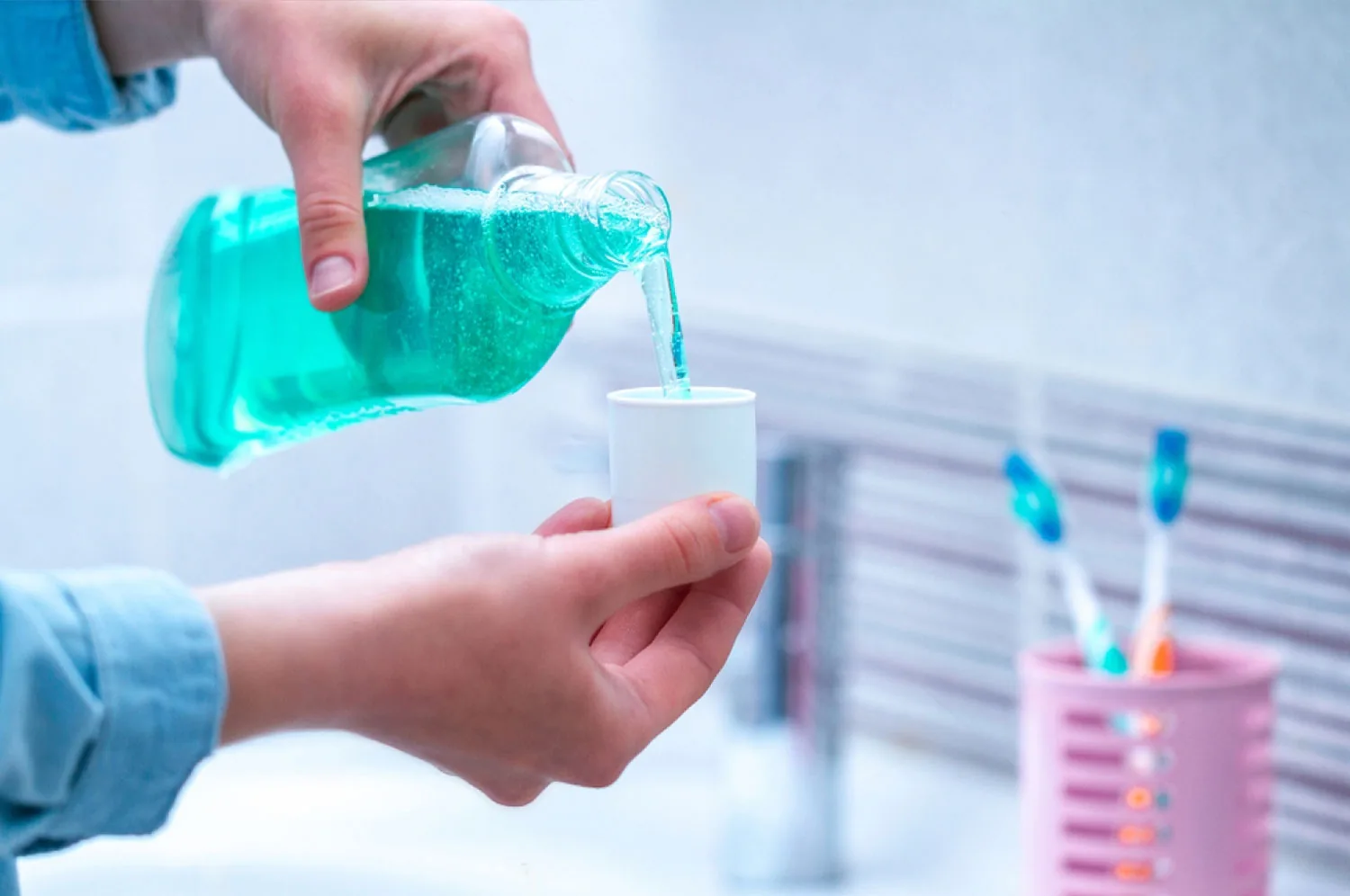
These mouthwash facts can help your dental health: the right rinse does more than freshen breath, but it never replaces brushing. Here is how to choose a mouthwash, how to use it, and when to ask Southern York Smile Care in Shrewsbury, PA for advice.
When is a mouthwash more than a mouthwash? Most people reach for it to chase away morning breath or the smell of lunch. That is fine, but a well-chosen rinse can also help control plaque, calm irritated gums and protect enamel. The trick is knowing which kind you are buying, because the bottles on the shelf can look almost the same.
Cosmetic vs. therapeutic mouthwash
The mouthwashes in a grocery or drug store fall into two basic types.
Cosmetic mouthwash
Cosmetic rinses freshen breath and leave a pleasant taste. They mask odor for a while, but they do not kill the bacteria that cause bad breath or treat any underlying problem. Think of them as the dental version of a breath mint.
Therapeutic mouthwash
Therapeutic rinses contain active ingredients that do real work. Depending on the formula, they can help:
- reduce plaque buildup
- control gingivitis, the early stage of gum disease
- strengthen enamel and lower the risk of tooth decay
- ease sensitivity
- reduce the bacteria that cause bad breath, rather than just covering the smell
Common active ingredients include cetylpyridinium chloride and essential oils for plaque and gingivitis, and fluoride for cavity protection. Some therapeutic rinses are sold over the counter. Others, such as chlorhexidine, are available only by prescription and are usually used for a short time, for example after gum treatment or oral surgery.
A simple test: if the label lists an active ingredient and a health claim, such as "helps prevent gingivitis," it is a therapeutic rinse. If it only promises fresh breath, it is cosmetic.
Look for the ADA Seal
When you shop for a mouthwash, look for the American Dental Association Seal of Acceptance on the label. The Seal means the manufacturer has given the ADA scientific evidence that the product is safe and does what it claims, and that the evidence has been reviewed by the ADA's own experts against objective standards.
The Seal does not mean one product is right for everyone. It means the claims on the label have been checked. Read more in 4 Reasons to Look for the ADA Seal.
Choosing the right mouthwash for you
The best rinse depends on what you need it for:
- Bleeding or puffy gums. An antiplaque, antigingivitis rinse can help, but bleeding gums also deserve a visit. See our gum disease treatments.
- Frequent cavities. A rinse that strengthens enamel may help. Fluoride rinses are one option. Holistic patients at Southern York Smile Care can choose a remineralization varnish in the office instead, and fluoride is available for patients who want it.
- Dry mouth. Many rinses contain alcohol, which can dry the mouth further. Choose an alcohol-free formula, and read Why Is Dry Mouth Dangerous?
- Bad breath. A therapeutic rinse can help, but lasting bad breath often has a cause that needs attention, such as gum disease, a cavity or dry mouth. See Bad Breath Treatment at Southern York Smile Care.
- Sensitive mouth. Alcohol-free and milder flavors are gentler on tender tissues.
Natural and alcohol-free rinses
Many patients prefer rinses without alcohol, artificial colors or strong flavors. Alcohol-free formulas are widely available and are a good choice for people with dry mouth, sensitive gums or a history of alcohol use. Some natural rinses use ingredients such as xylitol, which research shows can help reduce cavity-causing bacteria. Check the label for the ADA Seal or ask your dentist whether a product has good evidence behind it. A plain saltwater rinse can also soothe the mouth after an extraction or minor irritation, though it is not a substitute for a therapeutic rinse.
If you are not sure, bring your bottle to your next visit. Dr. Steven Haywood can tell you whether it suits your needs.
How to use mouthwash the right way
- Read the label. Use the amount listed, usually measured in the cap.
- Swish for the full time. Most rinses work best when swished for 30 seconds to a minute.
- Spit, do not swallow. Mouthwash is not meant to be swallowed.
- Time it well. Some dentists suggest using mouthwash at a different time than brushing, so you do not rinse away toothpaste right after you brush. Follow the directions on the product or the advice of your dentist.
- Wait to eat or drink. Give the rinse about half an hour to work before eating or drinking.
Important safety notes
Children and mouthwash
Mouthwash should not be given to children under six unless a dentist recommends it. Young children tend to swallow liquids without meaning to. For older children, choose a product made for kids, supervise its use and keep adult bottles out of reach. Our article Oral Rinses: An Extra Measure of Protection for Kids has more tips, and you can learn about children's dentistry at Southern York Smile Care.
Mouthwash is an extra, not a substitute
No mouthwash replaces brushing and flossing. A rinse cannot scrub away sticky plaque or clean between teeth the way a brush and floss can. Think of mouthwash as a helpful addition to a good routine: brush twice a day for two minutes with a soft brush, clean between your teeth once a day, and rinse if it helps. For brushing tips, see Are You Brushing Properly?
Common mouthwash myths
- "The stronger the burn, the better it works." The burn usually comes from alcohol or flavoring, not from how well a rinse fights plaque.
- "If my breath is fresh, my mouth is healthy." A rinse can hide the smell of gum disease or decay while the problem continues underneath.
- "More is better." Using more than the label suggests, or swishing for much longer, does not add protection.
Watch for changes
Some rinses can temporarily change taste or stain teeth with long-term use. If a rinse irritates your mouth, stop using it and ask your dentist about alternatives.
Regular care keeps your smile healthy
Mouthwash is a good supplement, but professional care is where problems are caught early. The team likes to see most patients twice a year for cleanings and checkups. At Southern York Smile Care, cleanings take a full 60 minutes, and oral cancer screening uses ViziLite, a blue dye rinse and OralCDX. Read more about preventive dentistry.
Your next step
Have questions about mouthwash or your daily routine? Call Southern York Smile Care at (717) 235-3871 or request an appointment at 4 S. Main St in Shrewsbury. Dr. Haywood and the team serve patients from York, southern York County and northern Baltimore County, MD.

DDS cum laude 1987, US Air Force residency, NYU cosmetic training and Fellow of the International Congress of Oral Implantologists, with 35+ years in practice.
Meet Dr. Haywood → Bad Breath Treatment at Southern York Smile Care
 Looking for a Great Dentist?
 Regular Cleanings and Heart Health