
Gum disease and tooth loss are closely linked: gum disease is a leading cause of lost teeth in adults, yet early care works well. It is very treatable when caught in time. At Southern York Smile Care in Shrewsbury, PA, we help patients spot the warning signs, treat gum disease gently, and keep their natural teeth for life.
Regular checkups are vital, but you also play a big part. Knowing what to look for, and acting quickly, can make the difference between a simple cleaning and losing a tooth.
How gum disease leads to tooth loss
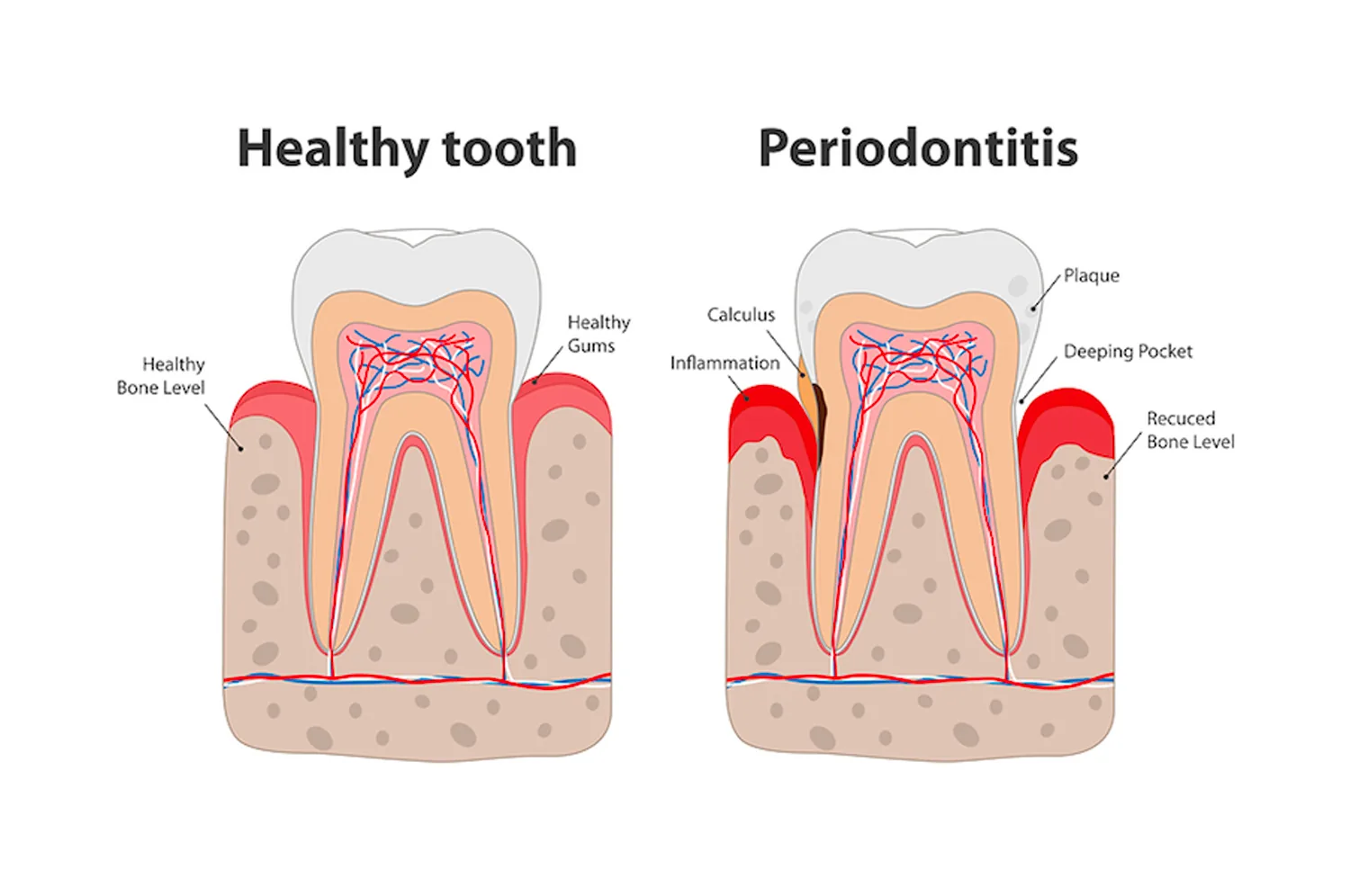
Gum disease, also called periodontal disease, starts with plaque, the sticky film of bacteria that forms on teeth every day. When plaque is not removed, it hardens into tartar along and below the gumline, where a toothbrush cannot reach.
Stage one: gingivitis
The gums react to bacteria with inflammation. They may look red, feel puffy and bleed when you brush or floss. At this stage, the damage can usually be reversed with a professional cleaning and better daily care. Our article You May Have Gingivitis explains the early signs.
Stage two: periodontitis
If inflammation continues, the gums begin to pull away from the teeth, forming pockets that collect more bacteria. The body's own response starts to break down the bone and fibers that hold teeth in place. This damage cannot simply grow back.
Advanced periodontitis
As more bone is lost, teeth loosen, shift and may need to be removed or fall out. Because gum disease is often painless until late, many people do not realize how far it has gone.
Why your gums matter beyond your mouth
Research has linked gum disease with other health conditions, including diabetes, heart disease and stroke, and with problems in pregnancy such as low birth weight. Scientists are still studying exactly how these links work, and gum disease has not been shown to directly cause them. Still, the inflammation and bacteria involved are not confined to your mouth, and keeping your gums healthy is a sensible part of caring for your whole body. Our article Regular Cleanings and Heart Health looks at one of these connections.
Warning signs to watch for
Everyone should watch for these signs of gum disease:
- Gums that bleed often, especially when brushing or flossing
- Gums that are tender, swollen or very red, or that show pus between the teeth when pressed
- A bite that changes suddenly, so your teeth no longer seem to fit together the same way
- Gums that pull away from the teeth, making teeth look longer
- A bad taste in your mouth or bad breath that will not go away
- Loose teeth, or teeth that seem to be spreading apart
- A change in how a partial denture fits
If you notice any of these, talk to us soon. Early treatment is simpler, more comfortable and more successful.
Who is at higher risk?
Anyone can develop gum disease, but some factors raise the risk:
- Smoking and vaping: Tobacco is one of the strongest risk factors, and it can hide bleeding, an early warning sign.
- Diabetes: Research shows a two-way link between diabetes and gum disease; each can make the other harder to control.
- Hormone changes: Pregnancy, puberty and menopause can make gums more sensitive.
- Genetics: Some people are more prone to gum disease despite good care.
- Dry mouth and certain medications: Less saliva means less natural protection.
- Crowded or crooked teeth: They are harder to clean well.
- Stress and clenching: These can add strain to teeth already weakened by bone loss.
How gum disease is diagnosed and treated
At your checkup, the gums are measured with a small, gentle probe to check pocket depth, and digital X-rays, with up to 90% less radiation than film, show the bone level. An intraoral camera lets you see your gums on screen. Oral DNA tests can identify the types of bacteria involved, which helps guide treatment.
Treatment depends on how advanced the disease is:
- Thorough cleaning: For gingivitis, a professional cleaning and better home care are often enough. Every cleaning at Southern York Smile Care is a full 60 minutes.
- Scaling and root planing: A deep cleaning removes tartar from below the gumline and smooths the root surfaces so gums can reattach.
- Laser-assisted care: The office has a Picasso soft-tissue laser, which can be used in gum treatment.
- Ongoing maintenance: After treatment, more frequent cleanings help keep the disease under control.
What to expect after treatment
After a deep cleaning, gums may feel a little tender for a few days, and teeth can be briefly sensitive to cold. Soft foods and warm salt-water rinses help. Over the following weeks, many patients notice that their gums bleed less and look firmer and pinker. At your follow-up, pocket depths are measured again to see how well the gums have healed and to decide how often you should come in for cleanings going forward.
Learn more on our gum disease treatments page. If you feel anxious, oral sedation is available; see sedation dentistry.
Preventing gum disease at home
Since plaque causes gum disease, removing it every day is the key to healthy gums.
- Brush twice a day for two minutes with a soft brush, angled toward the gumline.
- Clean between your teeth daily with floss, interdental brushes or a water flosser. See water flossing.
- Don't smoke or vape.
- Eat a balanced diet low in added sugar, and drink plenty of water.
- Keep regular cleanings and checkups so tartar never gets a foothold.
If you have already lost teeth
Once gum disease is under control, missing teeth can be replaced. Replacing them matters: gaps let neighboring teeth tip and drift, which makes them harder to clean and can put them at risk too. Options include a dental bridge, dentures, or dental implants, which also help preserve the jawbone. Dr. Steven Haywood is a Fellow of the International Congress of Oral Implantologists and plans implants with Green CT 3D imaging. If bone has been lost, bone grafting may help. Our article Are dental implants an option if I have receding gums? explains more.
The office is out of network with every insurer: you pay at your visit and the team files your claim for reimbursement. CareCredit and Cherry payment plans are available; see financing.
Protect your smile in Shrewsbury
Southern York Smile Care serves Shrewsbury, York, southern York County and northern Baltimore County. If your gums bleed, feel tender or look different, do not wait. Healthy gums should not bleed, and the sooner gum disease is treated, the more of your natural teeth you are likely to keep. Call (717) 235-3871 or request an appointment for an exam and cleaning.

DDS cum laude 1987, US Air Force residency, NYU cosmetic training and Fellow of the International Congress of Oral Implantologists, with 35+ years in practice.
Meet Dr. Haywood → 4 Oral Ailments to Discuss with your Dentist
 What Is Lurking Under your Gumline?
 Bad Breath Treatment at Southern York Smile Care