
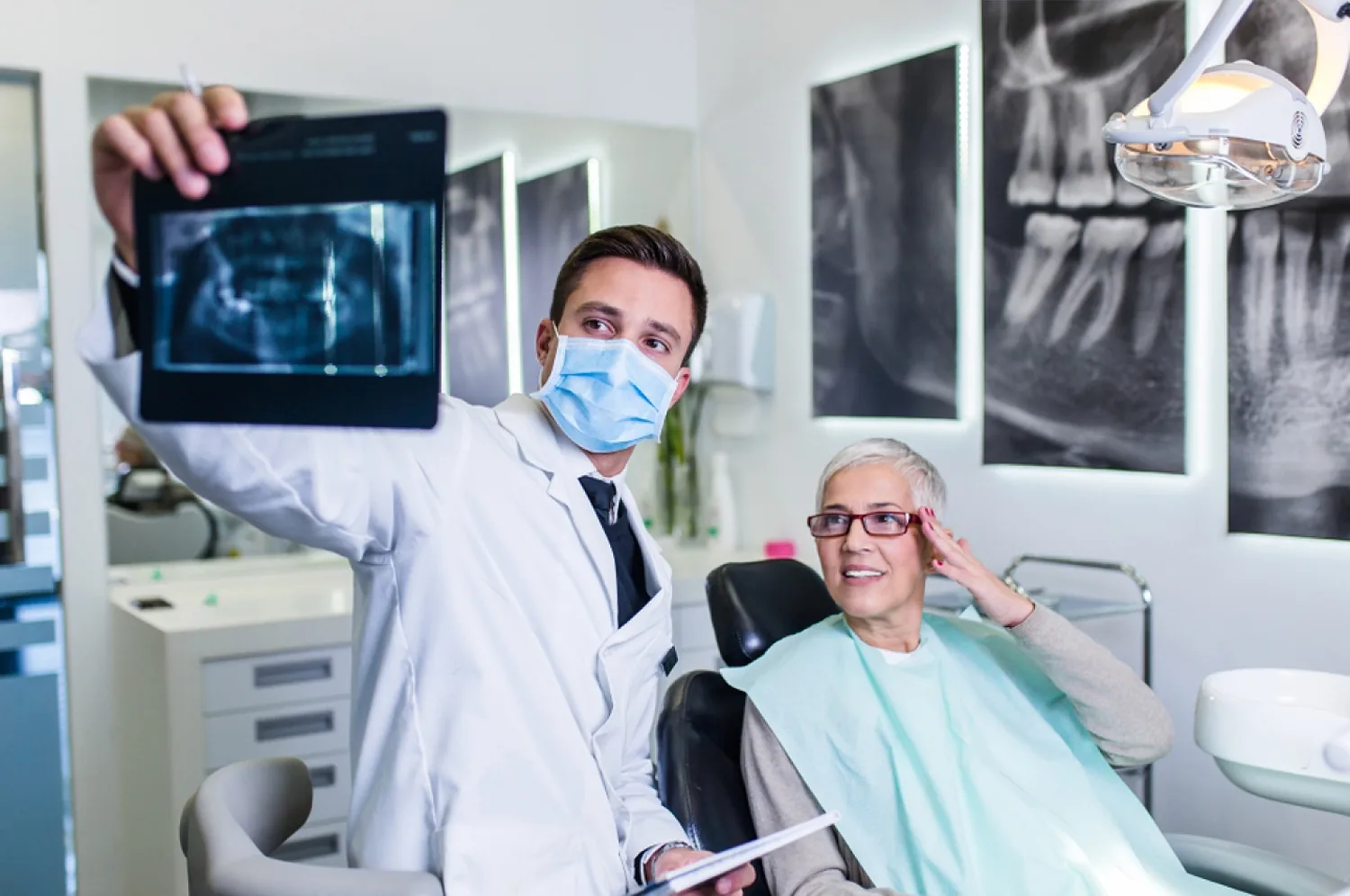
Are dental implants an option if you have receding gums? Often yes, once the gums are treated and the jaw has enough healthy bone. Gums and bone together form the base that holds an implant. At Southern York Smile Care in Shrewsbury, PA, Dr. Steven Haywood checks your gums and bone first, then explains the steps that make an implant last.
Dental implants have a high success rate when they are placed in the right conditions. Success depends on many things, and two of the most important are the health of your gums and the amount of bone in your jaw. If your gums have pulled back, it does not automatically rule you out. It does mean the gums need attention before, or as part of, implant treatment.
What receding gums are
Gum recession is when the gum tissue around a tooth pulls back and exposes more of the tooth, sometimes down to the root. You may notice that a tooth looks longer than before, that a notch has formed near the gum line, or that a tooth feels sensitive to cold.
Common causes include:
- Gum disease. Bacteria in plaque and tartar inflame the gums and slowly destroy the tissue and bone that support the teeth.
- Brushing too hard or using a hard-bristled brush.
- Grinding and clenching, which puts heavy force on the teeth and their support.
- Thin gum tissue, which runs in some families.
- Tobacco use, which reduces blood flow to the gums.
- Crooked teeth or a bad bite that push certain teeth out of line.
Receding gums should never be ignored. They can be a sign of gum disease, which is a serious oral health problem on its own, quite apart from any plan for an implant. Our post on gum disease and tooth loss explains how it progresses.
Why healthy gums matter for an implant
A dental implant is a small post placed in the jawbone where a tooth root used to be. Once the bone bonds to it, the implant holds a crown, a bridge or a denture. For the implant to last, it needs a secure foundation of both bone and gum tissue.
Healthy gums form a tight seal around the top of the implant, much like they do around a natural tooth. That seal keeps bacteria away from the bone. When gum tissue is thin or has pulled back, part of the implant or the crown can be exposed. That is not ideal for looks, and it can make the area harder to keep clean.
Active gum disease is also a risk. The same bacteria that cause gum disease around teeth can inflame the tissue around an implant, a condition called peri-implantitis. Over time it can cause bone loss around the implant. That is why gum health is treated first.
Step 1: Treat the gums
If your gums are inflamed or infected, the first step is to bring them back to health. Depending on what Dr. Haywood finds, treatment may include:
- A thorough professional cleaning to remove plaque and tartar above the gum line
- Deep cleaning below the gum line, called scaling and root planing, to clean the root surfaces
- Laser treatment of infected gum pockets. The office uses the Picasso laser for gentle soft-tissue care.
- Coaching on brushing, cleaning between the teeth and a gentler technique if over-brushing is part of the cause
Oral DNA tests can identify the specific bacteria behind gum disease, which helps guide treatment. Learn more on our gum disease treatments page.
Step 2: Rebuild gum tissue if needed
Once the gums are healthy, some patients still have areas where the tissue is too thin or has receded too far. A soft tissue graft can add gum tissue in those spots. In a graft, a small amount of tissue is placed where the gum has thinned, and it heals into the surrounding gum to create a thicker, more stable band of tissue.
Grafting can make an implant more stable, help it look more natural and protect nearby teeth from further recession. Dr. Haywood will explain whether a graft makes sense for you and how it fits into the timing of your implant.
Step 3: Check and build the bone
Gum disease often takes bone with it. After a tooth is lost, the jawbone in that area also shrinks over time. An implant needs enough bone height and width to hold it firmly.
At Southern York Smile Care, Dr. Haywood uses Green CT, a 3D cone beam scan, to measure the bone precisely before planning an implant. If the bone is thin, a bone graft can rebuild it. Sometimes grafting is done at the same visit as the extraction or the implant, and sometimes it is done first and allowed to heal. Our dental bone grafting page explains the options, and our article on implants with bone loss goes deeper.
Step 4: Plan and place the implant
With the gums and bone ready, the implant itself can be planned. Dr. Haywood is a Fellow of the International Congress of Oral Implantologists and uses the 3D scan and the iTero Element scanner to plan each implant digitally. Guided implant surgery uses a custom guide made from that plan, so the implant goes exactly where it was designed to go. Precise placement helps protect the gum and bone around it.
For patients who feel nervous, the office offers oral sedation. You can read about the full process on our dental implants page.
Keeping your implant and gums healthy
An implant cannot get a cavity, but the gum and bone around it still need daily care. After your implant is restored:
- Brush twice a day with a soft brush, angled gently at the gum line.
- Clean around the implant every day with floss, small interdental brushes or a water flosser.
- Wear a night guard if you grind your teeth.
- Avoid tobacco, which raises the risk of implant problems.
- Keep regular cleanings. Cleanings at the office are a full 60 minutes, and patients with a history of gum disease may need visits more often.
Is an implant right for you?
Every mouth is different. Some patients are ready for an implant right away. Others need a few months of gum treatment and grafting first. And for some, another option such as a bridge or a denture may suit them better. The only way to know is a careful exam and a 3D scan.
Kelley Fisher, the Patient Care and Treatment Coordinator, can walk you through the plan, insurance questions and financing. The office is out of network with every insurer, and the team files your claim for reimbursement. CareCredit and Cherry payment plans are available; see our financing page.
Schedule a consultation
If you have receding gums and are thinking about a dental implant, a consultation is the first step. Call Southern York Smile Care at (717) 235-3871 or request an appointment online. The office is at 4 S. Main St in Shrewsbury, PA, and serves patients from Shrewsbury, York, southern York County and northern Baltimore County, MD.

DDS cum laude 1987, US Air Force residency, NYU cosmetic training and Fellow of the International Congress of Oral Implantologists, with 35+ years in practice.
Meet Dr. Haywood → Implants Prevent Denture-related Health Problems
 Don’t Bite the Dentist!
 Coronation: Dental Crowns in Shrewsbury PA