
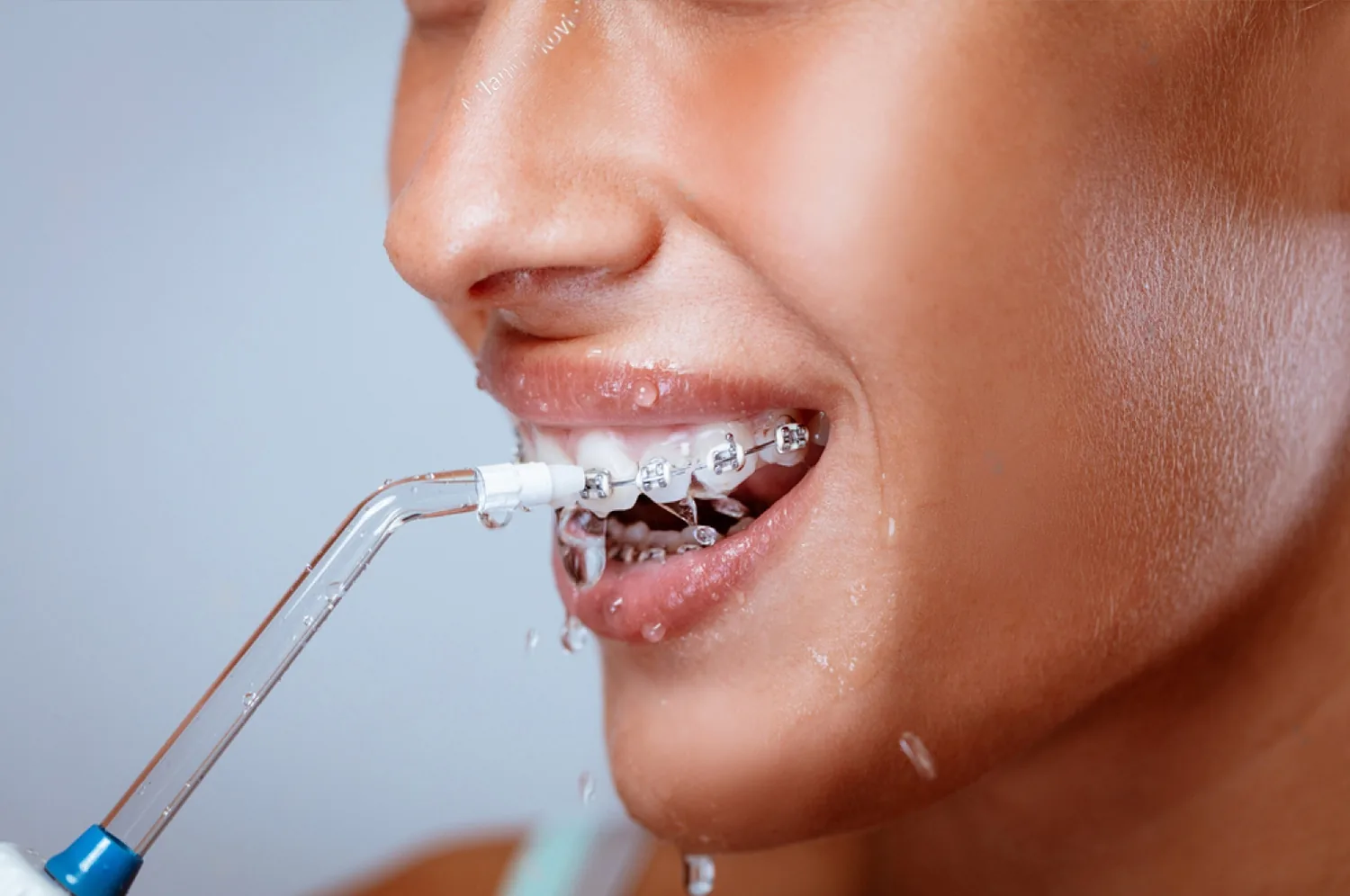
Water flossing uses a pulsing stream of water to clean between teeth and along the gum line, and for many people it is easier than string. Is it better than regular floss? Dr. Steven Haywood of Southern York Smile Care in Shrewsbury, PA, explains what each tool does well and how to choose.
Water flossers have been around for more than fifty years, and researchers have studied them many times. The short answer is that both water flossers and string floss can keep your gums healthy. The longer answer depends on your teeth, your hands, any dental work you have and, most of all, which tool you will use every day.
Why cleaning between your teeth matters
Your toothbrush cleans the front, back and chewing surfaces of your teeth. It does not reach well into the tight spaces between them, or into the shallow pocket where the gum meets the tooth. Plaque left in those places is where many cavities start and where gum disease begins.
Plaque that is not removed hardens into tartar within days. Tartar irritates the gums, making them red, puffy and prone to bleeding. That early stage is called gingivitis, and it can be reversed. If it goes on for months or years, it can turn into periodontitis, which damages the bone that holds your teeth in place. Our post on gum disease and tooth loss explains how that happens.
Cleaning between your teeth once a day breaks up the plaque before it has a chance to harden. Whether you use string, a water flosser or both, that daily habit is what protects you.
String floss: the pros and cons
String floss is the classic tool for good reason. It slides between teeth and scrapes plaque off the side of each tooth, which is where it works best.
What string floss does well
- Removes sticky plaque by physically wiping each tooth surface
- Costs very little and fits in a pocket or purse
- Needs no water, power or counter space
- Comes in waxed, unwaxed, tape and picks to suit different teeth
Where string floss falls short
- Back teeth can be hard to reach
- It takes some skill to curve the floss around each tooth correctly
- It can be hard to use with arthritis, limited hand movement or large fingers
- Threading floss under bridges or around appliances takes time
- Some people notice bleeding or soreness when they first start
To floss well, wrap the floss in a C shape around each tooth and slide it gently just under the gum line, then up and down a few times. Use a clean section for each space.
Water flossers: the pros and cons
A water flosser, sometimes called an oral irrigator, has a small tank and a handle with a thin tip. It sends a steady, pulsing jet of water between the teeth and along the gum line to flush out food and loosen plaque.
What a water flosser does well
- Easy to use, even for people who struggle to hold string floss
- Reaches back teeth and gum pockets with little effort
- Gentle on sensitive gums, and many people like the massaging feel
- Cleans around bridges, implants, crowns and aligner attachments
- Helpful for people with dry mouth who want a fresh feeling
Where a water flosser falls short
- Costs more up front than a box of floss
- Takes counter space and usually needs a power outlet or charging
- Can be messy at first until you learn to lean over the sink
- Rinses plaque loose but does not wipe the tooth surface the way string does
Research suggests a water flosser can reduce gum bleeding and inflammation as well as, or in some studies better than, string floss. The ADA gives its Seal of Acceptance to some water flossers, so look for it when you shop.
Who benefits most from a water flosser?
Some people find a water flosser makes a real difference:
- People with dental implants, bridges or crowns. The water reaches under a bridge and around implant posts where floss is hard to thread. If you have implants, our dental implants page has more on caring for them.
- People wearing clear aligners. During Invisalign treatment, you take your aligners out to eat. A quick water floss before putting them back keeps food from being trapped against your teeth. See Invisalign clear aligners.
- People with arthritis or limited hand movement. A water flosser needs far less finger control than string.
- People with early gum disease. Gentle flushing along the gum line helps irritated gums settle.
- Anyone who keeps skipping floss. If string floss never becomes a habit, a tool you enjoy using is a better choice than one that sits in the drawer.
How to use a water flosser
- Fill the tank with lukewarm water.
- Start on the lowest pressure and increase it slowly over a few days.
- Lean over the sink and close your lips around the tip so water does not spray.
- Aim the tip at the gum line at a slight angle.
- Pause briefly between each tooth, then move along the outside and inside of each row.
- Empty the tank and let it dry so bacteria do not grow inside.
The whole routine takes about one to two minutes once you get used to it.
The bottom line: it does not have to be either/or
For many people the best home routine is to brush, clean between the teeth with string floss and finish with a water flosser. The order is up to you. What matters most, by far, is that you clean between your teeth every day.
If you cannot decide, ask at your next cleaning. The team at Southern York Smile Care can look at your gums, show you where plaque tends to collect in your mouth and suggest the tool that fits you best. Cleanings at the office are a full 60 minutes, so there is time to practice together.
Regular cleanings still matter
No home tool removes tartar once it has formed. Only a professional cleaning can do that. Most people do well with a checkup and cleaning every six months, and people with gum disease may need visits more often. At each visit Dr. Haywood checks your gums, looks for early decay with digital X-rays that use up to 90% less radiation than film, and screens for oral cancer. Learn more on our dental cleanings and gum disease treatments pages.
Schedule your next cleaning
A daily routine you can stick with, plus regular visits, is the surest way to keep your teeth and gums healthy for life. Call Southern York Smile Care at (717) 235-3871 or request an appointment online. The office is at 4 S. Main St in Shrewsbury, PA, and serves patients from Shrewsbury, York, southern York County and northern Baltimore County, MD.

DDS cum laude 1987, US Air Force residency, NYU cosmetic training and Fellow of the International Congress of Oral Implantologists, with 35+ years in practice.
Meet Dr. Haywood → 4 Oral Ailments to Discuss with your Dentist
 Bad Breath Treatment at Southern York Smile Care
 10 Terrific Tooth Tips From Southern York Smile Care