
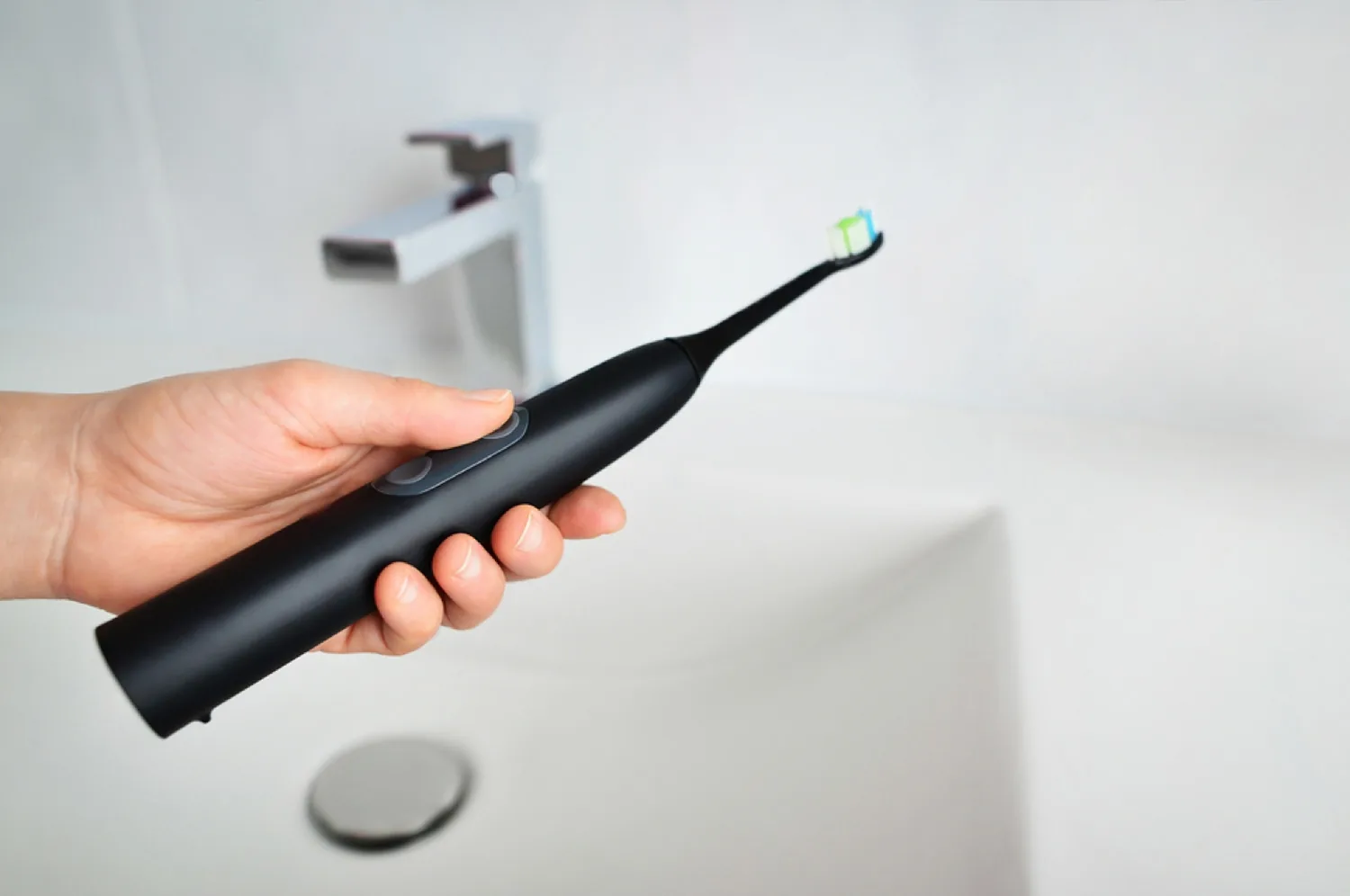
The techno-toothbrush, whether electric or sonic, can clean your teeth very well, but so can a manual brush used the right way. What matters most is how you brush. Here is a plain guide to the choices.
Walk down the oral care aisle and you will find brushes with timers, apps, pressure lights and a dozen brush heads. It is easy to wonder whether you need all of it. At Southern York Smile Care in Shrewsbury, PA, we are not here to sell you a gadget. We want you to brush well twice a day and clean between your teeth once a day, with whatever tool makes that easiest for you.
A short history of the electric toothbrush
Electric toothbrushes were first developed in Switzerland and reached American stores in the 1960s. The early models plugged into the wall and simply moved the brush head back and forth. They caught on, and the designs kept improving.
Today most powered brushes run on rechargeable batteries and fit in the palm of your hand. Some connect to your phone. The basic job has not changed, though. A brush, powered or not, is there to sweep plaque off your teeth and along your gumline before it can harden into tartar.
Electric, sonic or manual: what is the difference?
Manual brushes
A manual toothbrush is inexpensive, travels easily and needs no charger. In careful hands it does an excellent job. The catch is that it depends entirely on your technique and on how long you keep going. Many people brush for far less than two minutes and press too hard.
Standard electric brushes
Most electric brushes use a small round head that spins back and forth or pulses. The motor does the scrubbing, so you guide the brush slowly from tooth to tooth instead of moving it yourself. Many people find this makes it easier to clean well, especially along the gumline and on the back teeth.
Sonic brushes
Sonic brushes vibrate very quickly, with far more movements per minute than a standard electric brush. That rapid motion also stirs up the saliva and toothpaste around the bristles, which can help loosen plaque just beyond where the bristles touch. Some people love the clean feeling. Others find the buzzing too much at first and need a week or two to get used to it.
Research comparing brushes generally finds that powered brushes can remove somewhat more plaque than manual brushes for many people. But a manual brush used well beats a powered brush used badly every time.
Features that actually help
Modern powered brushes come with features the 1960s inventors never imagined. These are the ones worth paying attention to:
- A two-minute timer. Many brushes buzz every 30 seconds so you know when to move to the next part of your mouth. It is one of the simplest ways to brush long enough.
- A pressure sensor. Scrubbing too hard can wear enamel and push gums back. A light or a change in the motor tells you to ease up.
- Replacement reminders. Worn, splayed bristles clean poorly. A reminder helps you change the head every three to four months.
- Different brush heads. Softer heads for sensitive gums and smaller heads for tight spaces make the brush fit your mouth.
- Different modes. Gentle or sensitive settings can help if your teeth or gums are tender.
Features like whitening modes and app tracking can be nice extras, but they do not replace good technique.
Who may benefit most from a powered brush
Some people find an electric or sonic brush especially helpful:
- People with limited hand strength or arthritis, because the motor does most of the work.
- Teens and adults with Invisalign attachments, since attachments create small ledges where plaque can hide. Learn more about Invisalign clear aligners.
- Anyone with gum problems, who needs careful cleaning right at the gumline. Our gum disease treatments page explains why that edge matters.
- Children who rush, because a timer turns two minutes into a game.
- People with crowns, bridges or implants, who need to keep the edges of their dental work clean.
How to brush well with any toothbrush
Whatever you choose, the same simple steps make the biggest difference:
- Use a soft-bristled brush or brush head.
- Angle the bristles toward the gumline at about 45 degrees.
- With a manual brush, use small, gentle circles. With a powered brush, hold the head on each tooth for a moment and let the motor work.
- Clean the outer, inner and chewing surfaces of every tooth.
- Brush for two full minutes, twice a day.
- Clean between your teeth once a day with floss or a water flosser. Our article on water flossing explains that option.
- Rinse your brush and let it air dry standing upright.
If you are not sure whether your technique is working, ask at your next visit. Every cleaning at Southern York Smile Care is a full 60 minutes, so there is time for the team to show you where plaque is being missed and how to reach it. You can learn more on our dental cleanings page.
Looking after your brush
A toothbrush works best when it is clean, dry and not worn out. A few habits keep it that way:
- Rinse the bristles well after each use to wash away toothpaste and debris.
- Store the brush upright in the open so it can dry. A closed case or a drawer keeps it damp. Our article on why an air-dried toothbrush is a healthy toothbrush explains more.
- Do not share brushes or brush heads, even within a family.
- Replace the brush or head every three to four months, sooner if the bristles fray, and after a cold or flu.
- For a powered brush, wipe the handle and the spot where the head attaches now and then, since water and toothpaste can collect there.
If you are switching from a manual brush to a powered one, give yourself a couple of weeks. Your gums may feel a little different at first, and that usually settles quickly. If they bleed or feel sore for longer, let us know.
What your toothbrush cannot do
Even the best brush cannot remove tartar once it has hardened on your teeth, and it cannot spot a cavity starting between two teeth. That is the job of your regular exam and cleaning. Plaque that is left behind can lead to decay and gum disease, which may later call for restorative dentistry. A great brush at home, plus regular visits, is what keeps your smile healthy.
Ask us about the right toothbrush for you
If you are wondering whether a techno-toothbrush is worth it, bring your questions to your next checkup with Dr. Steven Haywood, DDS. Southern York Smile Care is at 4 S. Main St in Shrewsbury, PA, and serves York, southern York County and northern Baltimore County, MD. Call (717) 235-3871 or request an appointment.

DDS cum laude 1987, US Air Force residency, NYU cosmetic training and Fellow of the International Congress of Oral Implantologists, with 35+ years in practice.
Meet Dr. Haywood → Mouthwash Facts and Dental Health in Shrewsbury PA
 Bad Breath Treatment at Southern York Smile Care
 Regular Cleanings and Heart Health