The unsung heroes of dentistry are forensic dentists, who use teeth and dental records to identify people after crimes and disasters. Today Southern York Smile Care in Shrewsbury, PA, steps a little off the usual path to look at this rarely recognized field and why it matters to everyone.
What is forensic dentistry?
Forensic dentistry, known officially as forensic odontology, is the use of dental knowledge in legal investigations. Forensic dentists help police, medical examiners and disaster teams answer hard questions. Who is this person? What happened to them? Was a bite mark left at a crime scene?
These experts are rarely in the spotlight, but they play a vital role in criminal cases, accidents and large-scale disasters. Their work brings answers to investigators and, just as important, closure to families.
Why teeth are such good evidence
Your teeth are as unique as your fingerprints. No two mouths have exactly the same mix of tooth shapes, positions, fillings, crowns, root canals, missing teeth and bone patterns. Teeth are also the hardest part of the human body. They can survive fire, explosions, long periods in water and natural decay that destroy other means of identification.
Dental X-rays, dentures, crowns, implants and bite marks can all provide clues about a person's identity or how they died.
Most forensic dentists also work as general dentists. They take on forensic cases as consultants, often on short notice, when a medical examiner or law enforcement agency calls for help.
Identifying one victim
Identifying a person through dental records is much easier when investigators can narrow the possibilities down to a few people, or ideally just one. Then forensic dentists can contact the dentists who treated those people and compare records.
How a comparison works
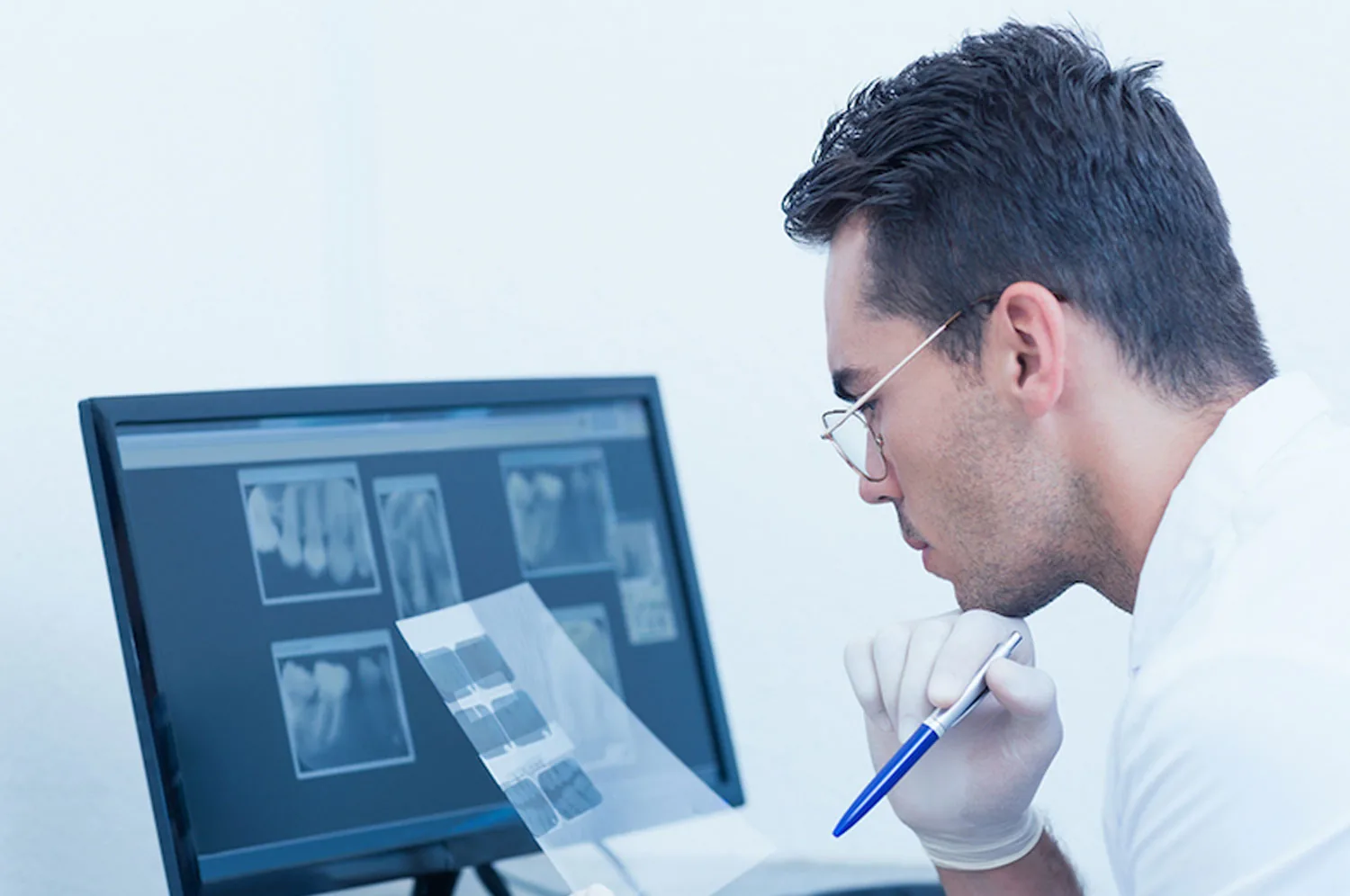
- Examine the remains. The forensic dentist charts every tooth, filling, crown and missing tooth, and takes X-rays.
- Gather records. The dental charts and X-rays of the possible match are collected from the person's dentist.
- Compare. Features like the shape of a filling, the outline of a root or a healed extraction site are matched point by point.
- Conclude. The dentist reports whether the records match, could match or rule the person out.
When the person's identity is completely unknown, forensic dentists may search other record collections, such as those kept by the armed forces and prisons.
Speed is one big advantage. As forensic dental consultant Dr. Mark Bernstein told CNN in 2013, “Dental identifications are so much quicker and so much less expensive than DNA.”
Identifying hundreds of victims
Identifying one victim of an accident or crime can be fairly straightforward. Natural disasters, plane crashes and other large tragedies are far more complex.
The September 11 effort
After the September 11, 2001 attacks, more than 140 dentists worked to identify remains recovered from the scene, according to Dr. Jeffrey Burkes, the chief forensic dental consultant for the effort. It was a painstaking, emotionally demanding job. As reported in Dental Practice Management in December 2001, the dentists were organized into four teams:
- The Go Team gathered dental evidence from the scene.
- The Antemortem Team studied the existing dental records of people believed to be victims.
- The Postmortem Team X-rayed the dental evidence that was recovered.
- The Comparison Team compared those X-rays with the records of missing people thought to have been at the scene.
Their work helped return loved ones to families who had nothing else to hold on to. Writing in Dentistry Today in 2006, Dr. Vincent Funaro described identifying victims of fires, disasters and crimes as one of dentistry's most important social, moral and professional duties.
Other work forensic dentists do
Identification is the best-known part of the job, but forensic dentists help in other ways too.
Estimating age
Teeth develop on a fairly predictable schedule through childhood and the teen years. By studying which teeth have formed and how far their roots have grown, a forensic dentist can estimate the age of a child or young adult. This can help when someone's age is unknown.
Bite marks
Forensic dentists have long been asked to study bite marks in criminal cases. This area is more debated today. Skin stretches and changes, so bite marks can be hard to read, and scientific reviews have urged caution. Identification from teeth and X-rays, by contrast, remains a well-accepted method.
Cases of abuse and neglect
Injuries to the mouth and face, and untreated dental disease, can be signs of abuse or neglect. Dentists are often among the first professionals to notice, and they play a part in protecting children and vulnerable adults.
Why your dental records matter
Forensic dentistry depends on one simple thing: good, accurate dental records. Every chart note, every X-ray and every scan your dentist keeps could one day help answer a question that matters a great deal.
At Southern York Smile Care, records are detailed and modern. Digital X-rays capture clear images with up to 90% less radiation than older film. The iTero Element 3D scanner creates a precise digital model of your teeth. The Green CT 3D cone beam scanner shows teeth and bone in three dimensions when that level of detail is needed. Intraoral camera photos record what the eye sees. Learn more on our dental technology page.
Practical tips
- Keep up with regular checkups, so your records stay current.
- If you move or change dentists, ask for your records to be transferred.
- Let your dentist know about any treatment you have had elsewhere.
- Keep a note of your dentist's name and phone number with your important papers.
Of course, the main reason for good records is your everyday care. Comparing this year's X-rays with last year's helps your dentist spot small changes early, long before they become big problems. Our preventive dentistry page explains more.
Dentistry's many roles
Most people think of dentists as the people who clean teeth and fill cavities. But dentistry reaches into many areas of health and public life, from oral cancer screening to forensic work. If you enjoyed this look behind the scenes, you may like our articles Can You Name 9 Dental Specialties? and Great Achievements in Dentistry.
Dr. Steven Haywood, DDS, earned a DDS cum laude from the University of Detroit in 1987, completed a US Air Force advanced residency and has 35+ years in practice. You can read more on the meet the doctor page.
Keep your smile and your records up to date
If it has been a while since your last checkup, now is a good time to come in. Call Southern York Smile Care at (717) 235-3871 or request an appointment. We are at 4 S. Main St in Shrewsbury, PA, and welcome patients from York, southern York County and northern Baltimore County, MD.

DDS cum laude 1987, US Air Force residency, NYU cosmetic training and Fellow of the International Congress of Oral Implantologists, with 35+ years in practice.
Meet Dr. Haywood → Dr. Steven W. Haywood: Calming Root Canal Fears
 Less Is More in Dentistry
 Been a While Since You’ve Visited a Dentist?