
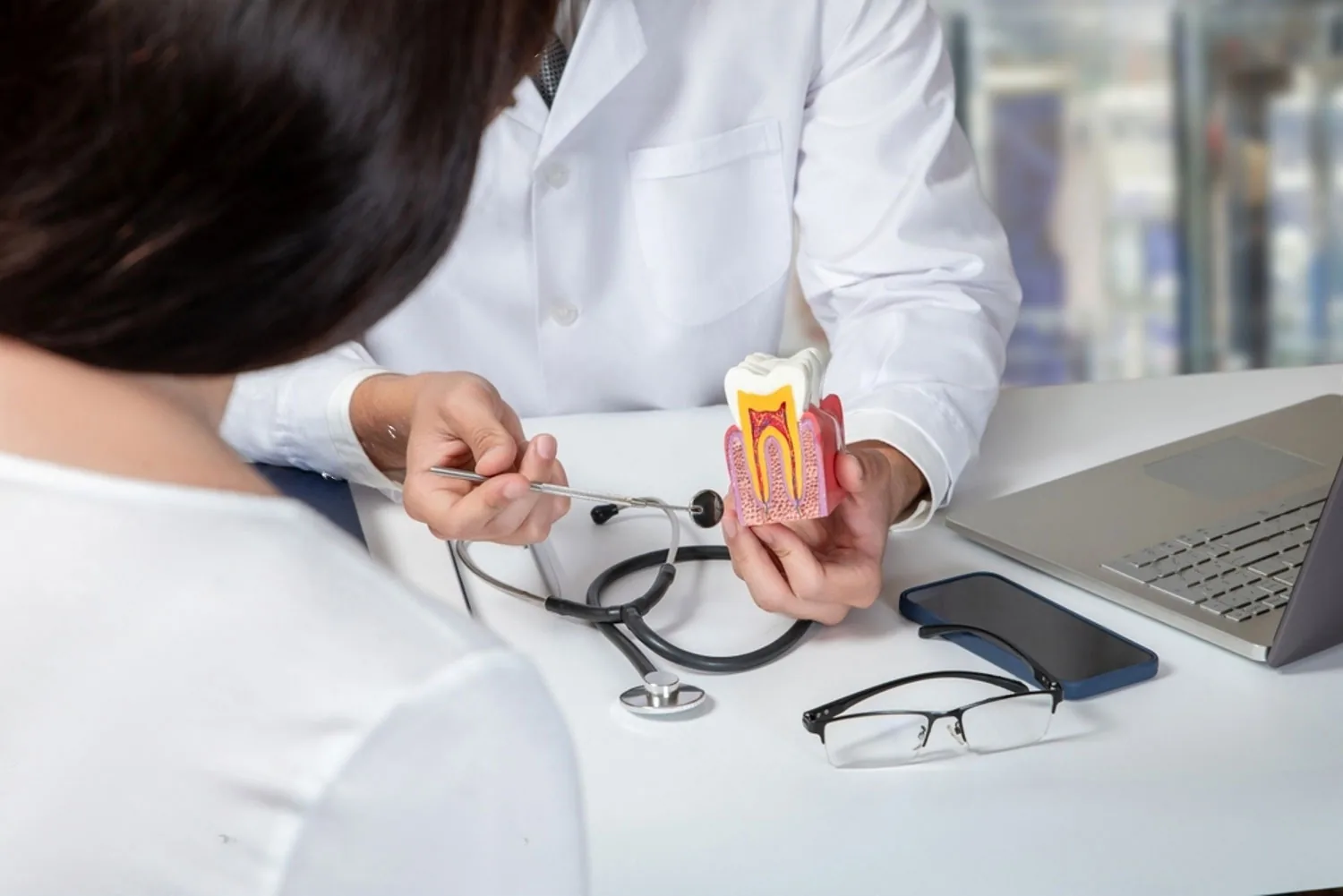
Dr. Steven W. Haywood helps calm root canal fears by explaining each step, numbing well and offering sedation if you're nervous. A root canal still has a reputation for pain, and that fear keeps some people from the dentist. The truth is that a root canal treats the pain of an infected tooth, and most people feel much better afterward.
What a Root Canal Actually Is
Inside every tooth, under the hard enamel and dentin, is a soft core called the pulp. It holds nerves and blood vessels and runs down through narrow channels in the roots, called root canals. When deep decay, a crack or an injury lets bacteria reach the pulp, it can become inflamed or infected.
An infected pulp can't heal on its own. Left alone, the infection can spread to the bone around the root and form an abscess. A root canal removes the infected tissue, cleans and shapes the inside of the tooth, and seals it to keep bacteria out. The tooth is then protected with a filling or, more often, a crown.
The name sounds intimidating, but the goal is simple: stop the infection, relieve the pain and save your natural tooth.
Why Root Canals Have a Scary Reputation
Much of the fear comes from the past, when numbing options and tools were more limited. Some also comes from timing. By the time many people need a root canal, the tooth already hurts badly. They remember that pain and link it to the treatment, even though the treatment is what ended it.
Today, a root canal is usually about as comfortable as getting a filling. For many people, the pain of the infection beforehand is far worse than anything they feel during the procedure.
Signs You Might Need a Root Canal
Not every infected tooth hurts, which is one reason regular checkups matter. When there are symptoms, they may include:
- A lasting toothache, especially when chewing or biting.
- Sensitivity to hot or cold that lingers after the food or drink is gone.
- A tooth that has darkened or turned gray.
- Swollen or tender gums near one tooth.
- A small pimple-like bump on the gum that may drain.
- Pain that wakes you up at night.
Teeth that are cracked or chipped, have had several large fillings, have been hit in an accident or have deep decay are more likely to need a root canal. If you have sudden, severe pain or swelling, see our page on emergency dental care.
How Dr. Haywood Keeps You Comfortable
Dr. Haywood has more than 35 years in practice and completed an advanced residency with the US Air Force after earning a DDS cum laude. Experience matters most when a patient is nervous, and the whole approach is built around making you feel at ease.
Clear explanations first
Fear grows when you don't know what's coming. Before treatment starts, you'll see your tooth on digital X-rays or an intraoral camera and hear what's going on in plain language. You'll know each step before it happens.
Thorough numbing
Treatment doesn't begin until the tooth is fully numb. Everyone responds to numbing a little differently. If you feel anything, raise your hand. The team will pause, add more anesthetic and wait until you're comfortable.
Sedation if you want it
For patients with dental anxiety, oral sedation is available. It is a pill taken before your visit for deeper calm; you'll need someone to drive you home. Learn more about sedation dentistry.
Never rushed
You can take breaks. The team goes at your pace, not the clock's.
What to Expect Step by Step
- Exam and X-rays confirm that the pulp is infected and show the shape of the roots. Digital X-rays use up to 90% less radiation than film.
- Numbing makes the tooth and surrounding area comfortable.
- A small opening is made in the top of the tooth to reach the pulp.
- Cleaning and shaping remove the infected tissue and disinfect the canals.
- Sealing fills the cleaned canals to keep bacteria out.
- Restoring the tooth with a filling or crown protects it and restores full chewing strength.
Many root canals are finished in one or two visits. Afterward, the tooth may feel tender for a few days. Over-the-counter pain relievers usually handle it well. Learn more on our root canals page.
Why Saving Your Natural Tooth Matters
Pulling an infected tooth might seem simpler, but keeping your own tooth is usually the better choice when it can be saved. A natural tooth keeps the bone around it healthy and holds neighboring teeth in place. When a tooth is lost, it should be replaced to prevent shifting and bone loss, which adds time and cost.
After a root canal, a back tooth usually needs a crown to protect it from cracking. Southern York Smile Care offers natural-looking all-porcelain crowns. If a tooth truly can't be saved, a single tooth implant is a strong replacement.
How to Lower Your Chances of Needing One
The best root canal is the one you never need. A few habits help:
- Brush twice a day and clean between your teeth every day.
- Keep up with checkups, so small cavities are filled before they reach the nerve. Cleanings at the office are a full 60 minutes.
- Wear a mouth guard for contact sports.
- Ask about a night guard if you grind your teeth.
- Don't chew ice or use your teeth to open things.
Learn more on the preventive dentistry page.
Common Questions About Root Canals
Will a root-canal-treated tooth still feel normal?
Yes. Once the tooth is restored, you'll chew and bite with it like any other tooth. The nerve inside is gone, so it won't sense hot or cold, but the gums and bone around it still give you normal feeling when you bite.
Can I wait and see if the pain goes away?
Sometimes tooth pain fades because the nerve has died, not because the problem is gone. The infection can keep spreading quietly. It's always safer to have a painful tooth checked, even if it starts to feel better.
How long does a treated tooth last?
With a good crown, daily care and regular checkups, a tooth that's had a root canal can last for many years, often for life.
Talk With Dr. Haywood About Your Tooth
If you have a toothache or have been told you need a root canal, call Southern York Smile Care at (717) 235-3871 or request an appointment. The office is at 4 S. Main St in Shrewsbury and welcomes patients from York, southern York County and northern Baltimore County. You can read more about the doctor on the meet the doctor page.

DDS cum laude 1987, US Air Force residency, NYU cosmetic training and Fellow of the International Congress of Oral Implantologists, with 35+ years in practice.
Meet Dr. Haywood → Less Is More in Dentistry
 Been a While Since You’ve Visited a Dentist?
 I Evaluate your Teeth – You Evaluate Southern York Smile Care