
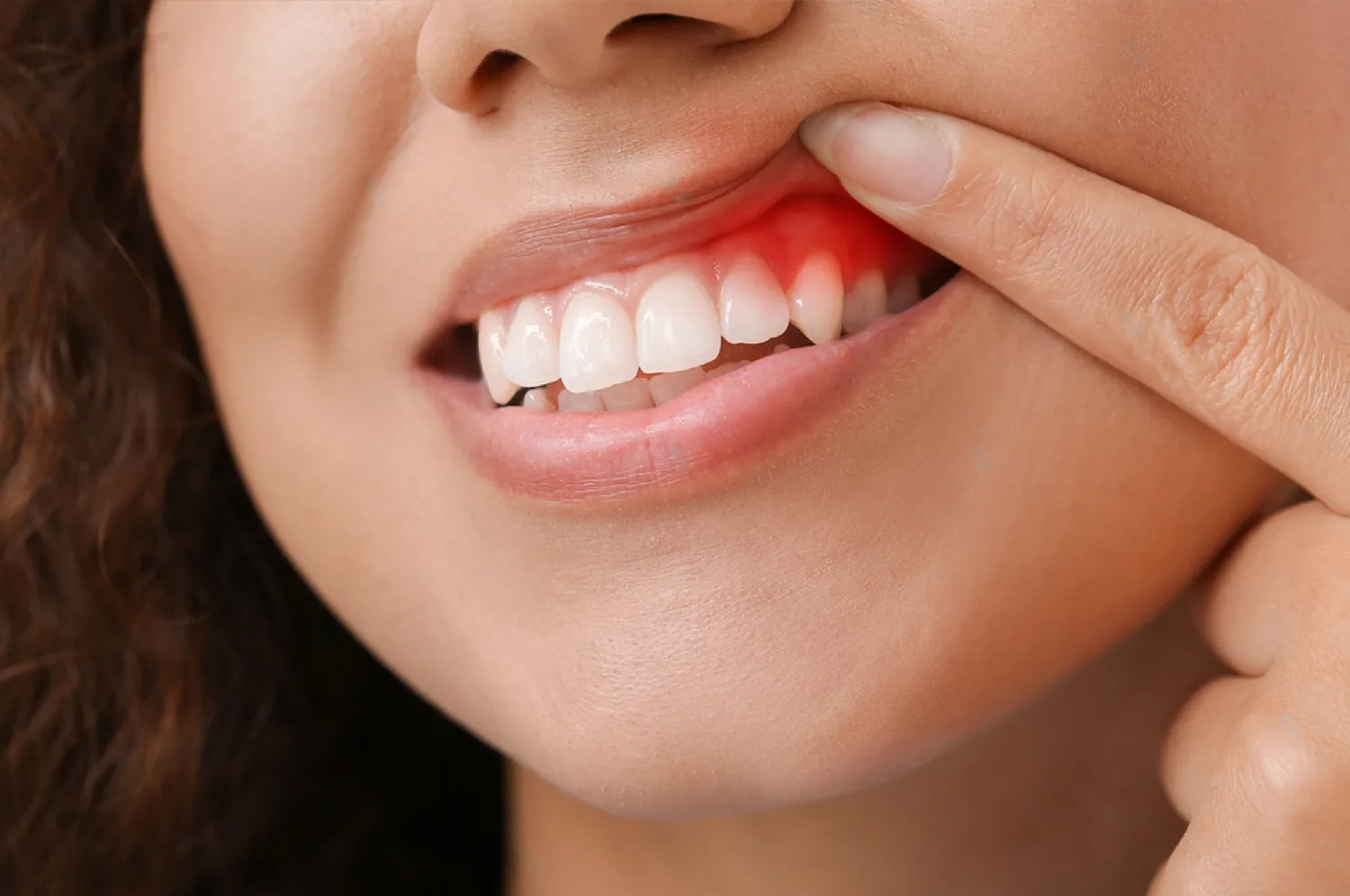
How much do you know about gum disease? It is among the most common adult health problems, and many people have it without knowing. According to the Centers for Disease Control and Prevention, nearly half of adults aged 30 and older have some form of periodontal disease. At Southern York Smile Care in Shrewsbury, PA, that made us wonder how much our readers know about it.
Take our five-question quiz below, then check your answers. Each answer includes a short explanation, so you will finish knowing more than when you started.
The gum disease quiz
Some questions have more than one correct answer. Jot yours down before scrolling to the answers.
1. Which of these are risk factors for gum disease?
- a. Pregnancy
- b. An underbite
- c. Diabetes
- d. Genetics
2. Which of these are possible signs of gum disease?
- a. Teeth that look longer than they used to
- b. A change in the way dentures fit
- c. Loose teeth
- d. Tender gums
3. Research has linked untreated gum disease with which of these?
- a. Heart disease
- b. Low birth weight babies
- c. Broken bones
- d. Stroke
4. About what share of adults 65 and older have gum disease?
- a. 1 in 20
- b. 1 in 8
- c. 1 in 4
- d. About 7 in 10
5. Which of these are used to treat gum disease?
- a. Scaling and root planing
- b. Soft tissue grafts
- c. Flap surgery
- d. Flip surgery
Quiz answers, explained
1. All of the above
Pregnancy, puberty, menopause and other hormone changes can make gums more sensitive to plaque. Any type of malocclusion, including an underbite or crowded teeth, makes some areas harder to clean. Diabetes and gum disease affect each other: high blood sugar raises the risk of gum infection, and gum infection can make blood sugar harder to control. Genetics play a role too; some people are more prone to gum disease even with good habits. Other risk factors include smoking, vaping, dry mouth, certain medications and stress.
2. All of the above
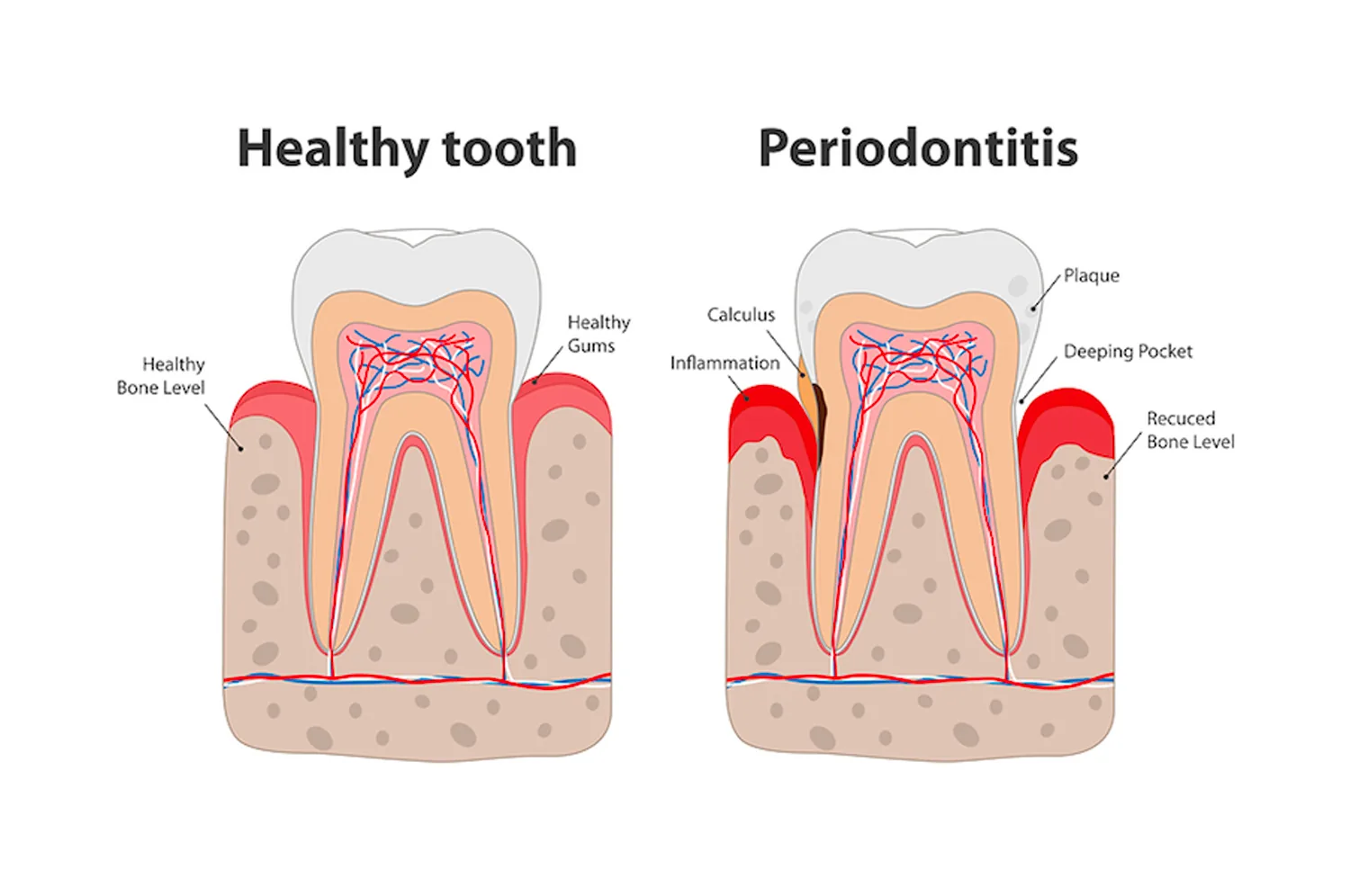
As gums pull back, teeth can look longer. Bone loss under the gums can change how dentures or partials fit, and can loosen natural teeth. Tender, red, swollen or bleeding gums are often the first signs. Some people, however, notice no symptoms at all, especially smokers, whose gums may bleed less. That is why regular exams matter.
3. a, b and d
Studies have found associations between gum disease and heart disease, stroke, and problems in pregnancy including low birth weight. Research also links it with diabetes and some lung infections. Scientists are still working out cause and effect, but inflammation appears to be part of the picture. Broken bones are not one of the links. Read more in Regular Cleanings and Heart Health.
4. d, about 7 in 10
The CDC reports that about 70% of adults 65 and older have periodontal disease. Gum disease tends to progress slowly over many years, so the risk rises with age. The good news is that more people are keeping their natural teeth longer than ever, and good gum care is a big part of that.
5. a, b and c
Scaling and root planing is a deep cleaning that removes tartar below the gumline and smooths root surfaces. Soft tissue grafts cover exposed roots where gums have receded. Flap surgery lifts the gums so deep tartar can be cleaned away and the tissue reshaped. "Flip surgery" is made up; we added it to keep you on your toes.
Bonus: can gum disease be reversed?
Partly. Gingivitis, the earliest stage, can usually be reversed. With a thorough professional cleaning and good daily brushing and flossing, inflamed gums often return to health within a few weeks. Periodontitis, the later stage, involves loss of the bone and fibers that hold teeth in place. That lost support does not simply grow back on its own, but treatment can stop the disease from getting worse, and some lost tissue can be rebuilt with grafting. In other words, the earlier you act, the more you keep. If your gums bleed when you brush, treat it as a signal to book a checkup, not as something normal.
How did you do?
- 5 correct: You know your gums. Keep up the good habits.
- 3 to 4 correct: A solid score, with a few surprises worth remembering.
- 0 to 2 correct: You are not alone. Gum disease is easy to overlook, which is exactly why it is so common.
Whatever your score, the most important takeaway is that gum disease is often silent, and the earlier it is found, the easier it is to treat. Share the quiz with family members too, since gum disease can run in families and habits are often shared. If you want to learn the earliest signs in more detail, read You May Have Gingivitis.
How Southern York Smile Care checks and treats your gums
At every checkup, the gums are measured with a gentle probe to check for pockets, and digital X-rays, with up to 90% less radiation than film, show the bone around your teeth. An intraoral camera lets you see what we see. Oral DNA tests can identify the specific bacteria involved, which helps guide treatment.
Every cleaning is a full 60 minutes, which leaves time to clean carefully below the gumline and talk with you about your home care. When gum disease is present, treatment may include scaling and root planing and more frequent maintenance cleanings. The office's technology also includes a Picasso soft-tissue laser. Learn more about gum disease treatments and dental cleanings.
If you feel nervous about treatment, oral sedation is available. For patients who prefer a holistic approach, see our holistic dentistry page.
Keep your gums healthy
Daily habits make the biggest difference:
- Brush twice a day for two minutes with a soft brush angled toward the gumline.
- Clean between your teeth every day with floss, interdental brushes or a water flosser.
- Don't smoke or vape.
- Manage conditions like diabetes with your doctor.
- Keep regular cleanings and checkups.
For more on the link between gum health and keeping your teeth, read Gum Disease and Tooth Loss.
Schedule a gum checkup in Shrewsbury
If you have any signs of gum disease, don't delay. The earlier it is diagnosed, the more treatable it is. Southern York Smile Care serves Shrewsbury, York, southern York County and northern Baltimore County. The office is out of network with every insurer: you pay at your visit and the team files your claim. Call (717) 235-3871 or request an appointment today.

DDS cum laude 1987, US Air Force residency, NYU cosmetic training and Fellow of the International Congress of Oral Implantologists, with 35+ years in practice.
Meet Dr. Haywood → What Is Lurking Under your Gumline?
 Gum Disease and Tooth Loss
 Dr. Steven W. Haywood: Calming Root Canal Fears