
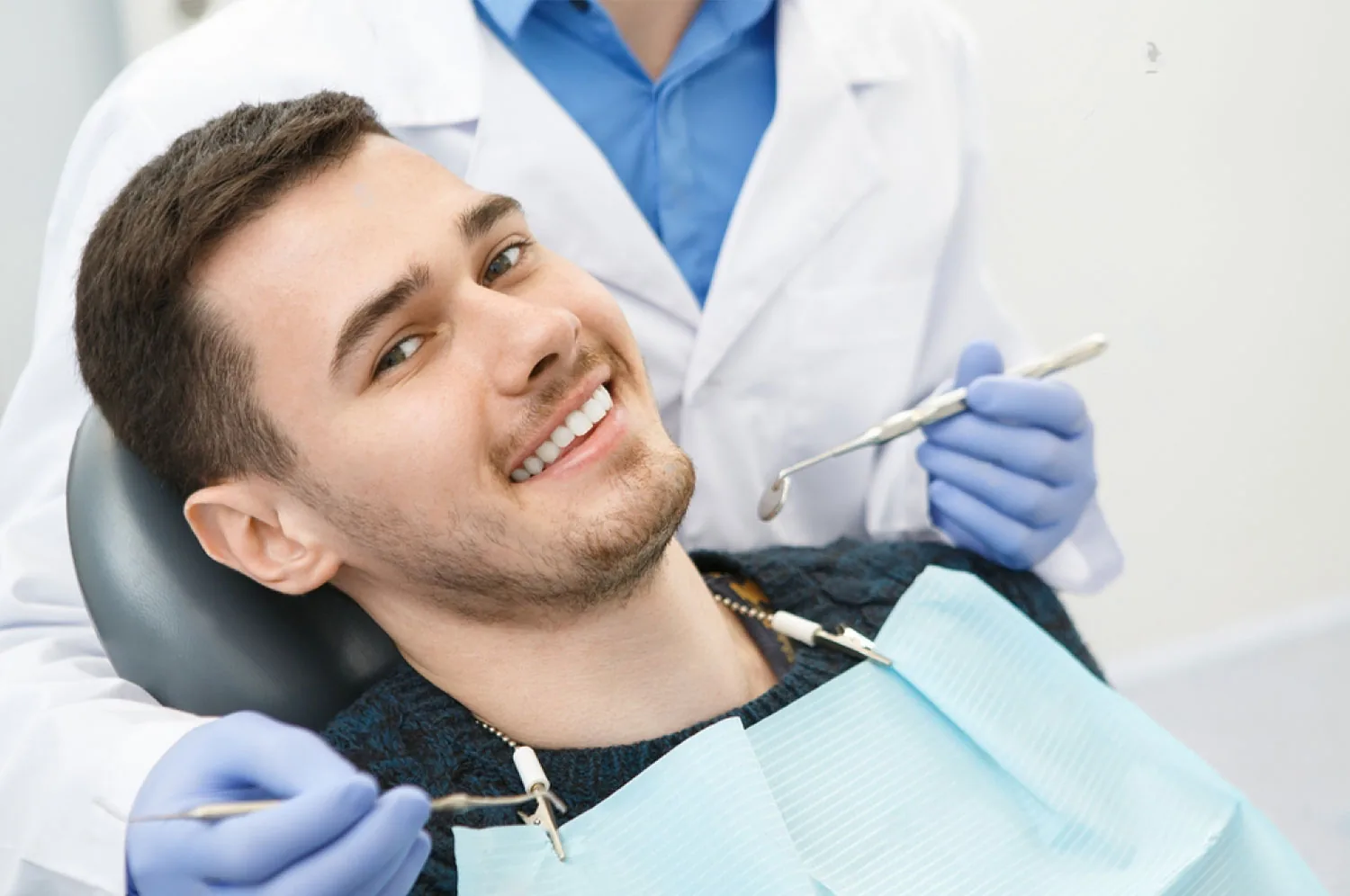
Here are three reasons not to skip a dental checkup, even when your teeth feel fine: gum recession, hidden decay and oral cancer. Life gets busy, and at Southern York Smile Care in Shrewsbury, PA, we understand. But before you cancel or postpone, here is why your checkup deserves a spot near the top of your to-do list.
"But my teeth feel fine"
It is easy to think that if nothing hurts, nothing is wrong. Unfortunately, no news is not always good news in dentistry. Many dental problems progress quietly, without pain, until they are well advanced.
Checkups are designed to catch these problems early. Small problems are usually simpler, quicker and more comfortable to treat, and they protect more of your natural teeth. For most people, a visit every six months works well. Some patients need to come more often, and we will tell you what schedule fits your mouth.
A checkup also gives you a chance to ask questions. Maybe a tooth has felt different lately, or you want to know whether whitening or straightening makes sense for you. Bring your list. Your checkup is your time.
Reason 1: your gums may be receding
Gum recession does not happen all at once. Gum tissue can pull back so slowly that you do not notice it, until the roots of your teeth and the bone that holds them are at risk.
Why recession matters
Tooth roots are not covered by enamel, so they are more sensitive and more likely to decay. As gums recede, pockets can form where bacteria collect. Over time, gum disease can damage the bone around your teeth and lead to loose teeth.
What we check
At your checkup, we measure the space between your gums and teeth, look for bleeding and swelling, and compare with past visits. If we find early signs of gum disease, treatment is often simple. When needed, oral DNA tests can identify the bacteria involved so treatment can be targeted. Learn more about our gum disease treatments.
Common signs
- Gums that bleed when you brush or floss
- Teeth that look longer than before
- Sensitivity near the gumline
- Persistent bad breath
Protecting your gums at home
Brush gently with a soft-bristled brush, angling the bristles toward the gumline. Scrubbing hard can actually make recession worse. Clean between your teeth every day with floss, interdental brushes or a water flosser. If you grind or clench your teeth, mention it at your checkup, because the extra force can affect your gums and teeth over time.
Reason 2: decay may be lurking
When acids from plaque start eating into a tooth, you usually cannot feel it. Enamel has no nerves. Often a cavity does not hurt until it has moved through the enamel and the softer dentin beneath and reached the nerve. By then, the cavity can be large, and treatment may mean a bigger filling, a crown or even a root canal.
Finding cavities early
We use tools that help us find decay while it is still small:
- Digital X-rays show decay between teeth and under old fillings, with up to 90% less radiation exposure than film.
- DIAGNOdent helps detect early decay in the grooves of your teeth.
- An intraoral camera lets you see close-ups of your own teeth on a screen.
Cleanings stop decay before it starts
Regular cleanings remove plaque and hardened tartar before they can do damage. At our office, dental cleanings are a full 60 minutes, so there is time to be thorough. When a small cavity does need repair, our mercury-free office uses tooth-colored, BPA-free white fillings.
Reason 3: oral cancer screening
The American Cancer Society estimates that more than 50,000 people in the United States are diagnosed each year with cancers of the mouth and throat. As with all cancers, finding it early makes a real difference.
How we screen
Your checkup includes a careful look at your lips, tongue, cheeks, floor of the mouth, throat and the tissues around your teeth. We use additional screening tools, including ViziLite, a blue dye rinse and OralCDX when a spot needs a closer look. Learn more on our oral cancer screening page.
Who is at higher risk?
Tobacco use and heavy alcohol use raise the risk, and some oral cancers are linked to HPV. But oral cancer can affect anyone, including people with none of these risk factors. That is why screening is part of every checkup.
Signs to report between visits
- A sore that does not heal within two weeks
- A red or white patch in the mouth
- A lump or thickening in the cheek or neck
- Trouble chewing or swallowing, or numbness in the mouth
What happens after your exam
After we have examined your whole mouth, Dr. Steven Haywood, DDS, will explain what we found and what, if anything, needs attention. That might be as simple as flossing more often in one area. Or it might be a conversation about a larger plan, such as replacing an old filling or straightening teeth with Invisalign. Either way, you will get clear information and time to ask questions, so you can keep your smile healthy and bright.
Dr. Haywood has more than 35 years in practice and graduated cum laude from the University of Detroit. Learn more on our Meet the Doctor page.
If cost is a worry, we can help. We are out of network with every insurer: you pay at the visit and our office files the claim so your plan can reimburse you. CareCredit and Cherry payment plans are available. See our financing page.
What if it has been a while?
If it has been a year, five years or longer since your last checkup, you are not alone, and you will not be lectured. Many people put off the dentist because of busy schedules, cost worries or anxiety. We will start where you are. Your first visit back may focus on an exam, X-rays and a conversation about your goals, with a cleaning planned around what your gums need.
If you feel nervous, tell us. We offer oral sedation, and we will explain each step before we begin. You can read more on our sedation dentistry page or in our article Been a While Since You've Visited a Dentist?
Keep your smile on schedule
Twice-yearly checkups help you avoid painful surprises and keep your smile healthy. To schedule your next exam and cleaning, call Southern York Smile Care at (717) 235-3871 or request an appointment at 4 S. Main St in Shrewsbury. We welcome patients from York, southern York County and northern Baltimore County, MD.

DDS cum laude 1987, US Air Force residency, NYU cosmetic training and Fellow of the International Congress of Oral Implantologists, with 35+ years in practice.
Meet Dr. Haywood → Coronation: Dental Crowns in Shrewsbury PA
 Comfort and Style with General Dentistry in Shrewsbury PA
 Three Reasons for Checkups: Dental Health in Shrewsbury PA