
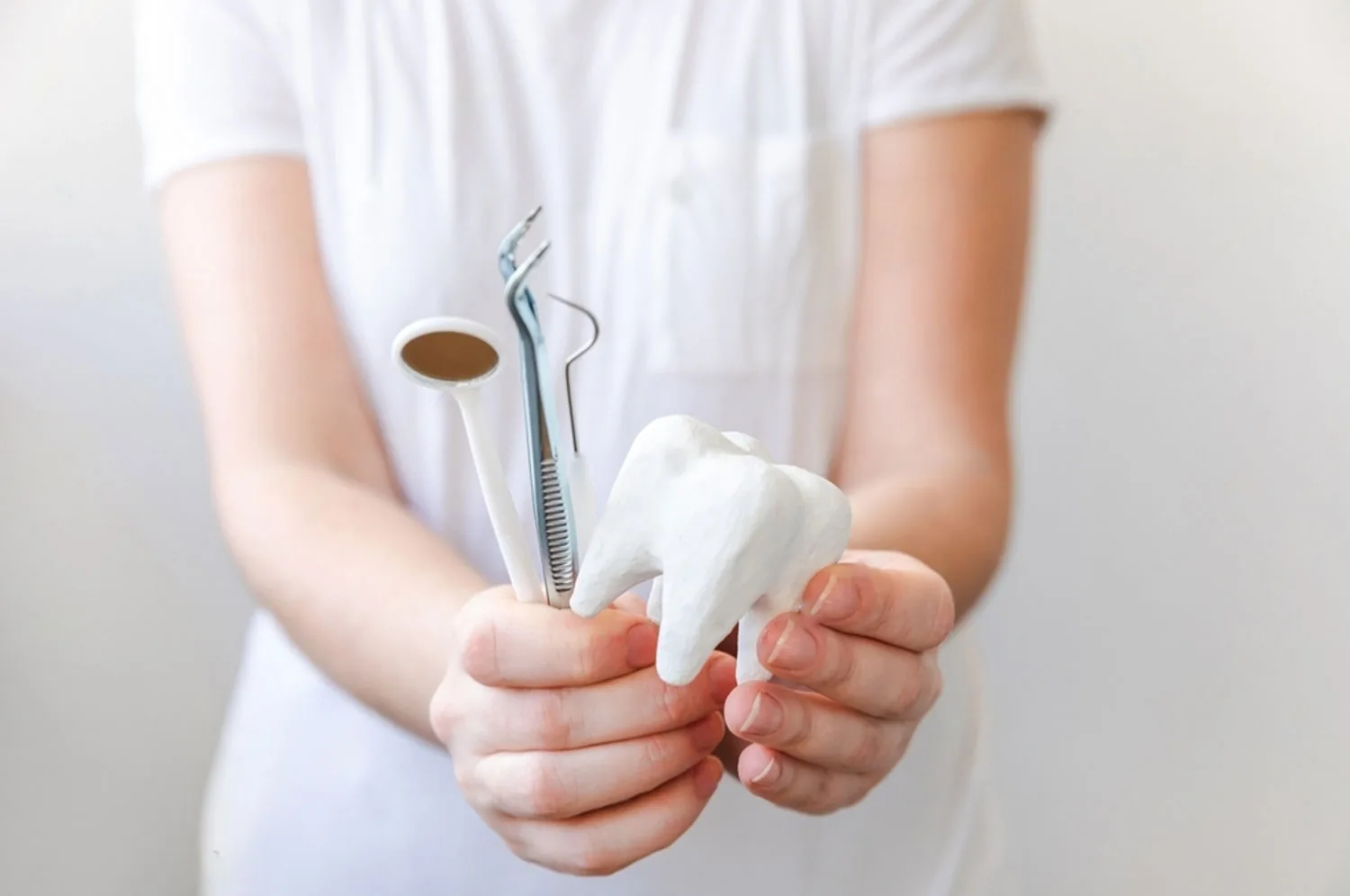
Southern York Smile Care takes care of plaque, calculus and cavities, three terms that are easy to mix up but are not the same. Each one leads to the next. Here is what each means, how they are connected and how to stop the chain early.
Many patients use these words as if they meant the same thing. They are actually three stages of one process. Plaque forms first. If it stays, it can harden into calculus. Both feed the bacteria that eventually cause cavities. Dr. Steven Haywood, DDS, likes to explain the difference because once you understand the chain, it is much easier to break it.
What is plaque?
Plaque is a soft, sticky film of bacteria that forms on your teeth every day. It starts building up within hours of brushing, which is why you can feel a fuzzy coating on your teeth in the morning. Plaque is colorless or pale yellow, so it is hard to see, especially along the gumline and between teeth.
The bacteria in plaque feed on sugars and starches from your food. As they feed, they release acid. That acid attacks your enamel, and other substances from plaque irritate your gums.
How to remove plaque
The good news is that plaque is soft. You can remove it yourself with:
- Brushing twice a day for two minutes with a soft-bristled brush, angled toward the gumline.
- Cleaning between your teeth once a day with floss or a water flosser.
- Limiting sugary snacks and drinks, especially between meals.
Plaque that is missed day after day is where the trouble starts. The spots people most often miss are the backs of the lower front teeth, the far sides of the last molars and the gumline all the way around.
What is calculus?
Calculus, also called tartar, is plaque that has hardened. When plaque is left on the teeth, minerals from your saliva build up in it, and it turns into a hard, crusty deposit. Calculus often forms behind the lower front teeth and on the outside of the upper back teeth, near where the salivary glands release saliva. It can also form below the gumline, where you cannot see it.
Calculus can look yellow, brown or even dark. Its rough surface makes it easy for new plaque to stick, so the problem grows.
Why you cannot brush calculus away
Once plaque has hardened, a toothbrush and floss will not remove it. It takes professional instruments during a dental cleaning. Calculus near and under the gums irritates the tissue and is a major cause of gingivitis, the early stage of gum disease. Left alone, gum disease can damage the bone that holds your teeth. Our gum disease treatments page explains how this is treated, and what is lurking under your gumline? takes a closer look.
Is it a stain or is it tartar?
Patients sometimes mistake tartar for staining, and the other way around. Stains from coffee, tea, red wine or tobacco sit on or in the enamel and are smooth to the touch. Tartar is a raised, rough deposit you can often feel with your tongue, usually right at the gumline. Both can be cleaned at your visit, and if stains remain after a cleaning, professional teeth whitening can brighten your smile.
What is a cavity?
A cavity is a hole in the tooth caused by decay. Here is how it forms:
- Plaque bacteria feed on sugars and release acid.
- The acid pulls minerals out of your enamel, creating a weak, chalky spot.
- If the attacks continue, the weak spot breaks down into a hole in the enamel.
- The decay reaches the softer dentin underneath and spreads faster.
- If it reaches the nerve, the tooth can become painful or infected.
Plaque and calculus are not cavities, but they create the conditions for them. In short: control plaque to prevent calculus, and control both to prevent decay.
Signs you may have a cavity
Early cavities usually cause no symptoms at all, which is why regular exams matter. As decay grows, you may notice:
- Sensitivity to sweets, hot or cold drinks.
- A sharp twinge when you bite down.
- A visible pit, hole or dark spot on a tooth.
- Food getting caught in the same spot again and again.
- A toothache that lingers or wakes you at night.
If you notice any of these, do not wait for your next routine visit. A small cavity is a quick, simple repair. A large one may need a crown or a root canal.
Early decay can sometimes be reversed
In the very earliest stage, before a hole forms, enamel can regain some of the minerals it lost. Saliva helps with this, and so do remineralizing treatments. Fluoride is available for patients who want it, and remineralization varnish is offered for holistic patients. Once a true cavity forms, though, it needs a filling.
How Southern York Smile Care breaks the chain
Thorough cleanings
Every cleaning at Southern York Smile Care is a full 60 minutes. That leaves time to remove calculus above and below the gumline, polish away plaque and stains, and show you any areas your brush is missing. Learn more on our dental cleanings page.
Early detection
Finding decay early keeps repairs small. Southern York Smile Care uses DIAGNOdent laser cavity detection, digital X-rays with up to 90% less radiation than older film, and an intraoral camera so you can see what the dentist sees. More on our dental technology page.
Conservative repairs
When a cavity does form, the goal is to remove as little healthy tooth as possible. Air abrasion can remove small areas of decay gently, often without the drill. Southern York Smile Care is a mercury-free office and places tooth-colored, BPA-free white fillings that bond to the tooth. Larger areas of damage may need a crown, explained on our restorative dentistry page.
Your daily plan to stop plaque
- Brush for two full minutes, morning and night.
- Clean between your teeth every day.
- Drink water through the day to keep saliva flowing.
- Keep sweets and acidic drinks to mealtimes.
- Choose sugar-free gum after meals.
- Replace your toothbrush every three to four months.
- Keep your regular cleanings and exams.
For more ideas, read 10 terrific tooth tips and beware of hidden sugar.
Schedule a cleaning in Shrewsbury
Whether you have questions about plaque, need calculus removed or think you might have a cavity, the team is here to help. We are also happy to talk about cosmetic options such as teeth whitening and veneers once your teeth and gums are healthy. Southern York Smile Care is at 4 S. Main St in Shrewsbury, PA, and serves York, southern York County and northern Baltimore County, MD. Call (717) 235-3871 or request an appointment.

DDS cum laude 1987, US Air Force residency, NYU cosmetic training and Fellow of the International Congress of Oral Implantologists, with 35+ years in practice.
Meet Dr. Haywood → Dr. Steven W. Haywood: Calming Root Canal Fears
 Less Is More in Dentistry
 Been a While Since You’ve Visited a Dentist?