

Crown or veneer? Both can make a tooth look better, but a crown strengthens a weak tooth while a veneer mainly improves how it looks. At Southern York Smile Care in Shrewsbury, PA, Dr. Steven Haywood helps you choose the one that fits your tooth, your goals and your budget.
Crowns and porcelain veneers are two of the most popular ways to create a beautiful smile. Yet many patients are not sure how they differ, or why a dentist might suggest one over the other. This guide explains what each one is, when each makes sense, and why the skill of both the dentist and the dental lab matters so much to the result.
What is a dental crown?
A dental crown is a cap that covers the entire visible part of a tooth, all the way around and over the top. It holds a damaged tooth together, protects it from breaking, and restores its shape and color. The American Dental Association has a plain-language guide to dental crowns.
Crowns can be made from several materials:
- All-porcelain (ceramic). Metal-free and very natural looking. All-porcelain crowns can be matched closely to the shade of your other teeth.
- Porcelain fused to metal. A metal base with porcelain on top. Strong, but a thin dark line can sometimes show at the gumline.
- Gold. Very durable and kind to opposing teeth, but not tooth-colored, so it is usually used on back teeth.
To place a crown, the tooth is shaped so the crown can fit over it. A precise impression or 3D scan is taken, and the crown is made to fit exactly. It is then bonded in place with a special dental adhesive.
What is a porcelain veneer?
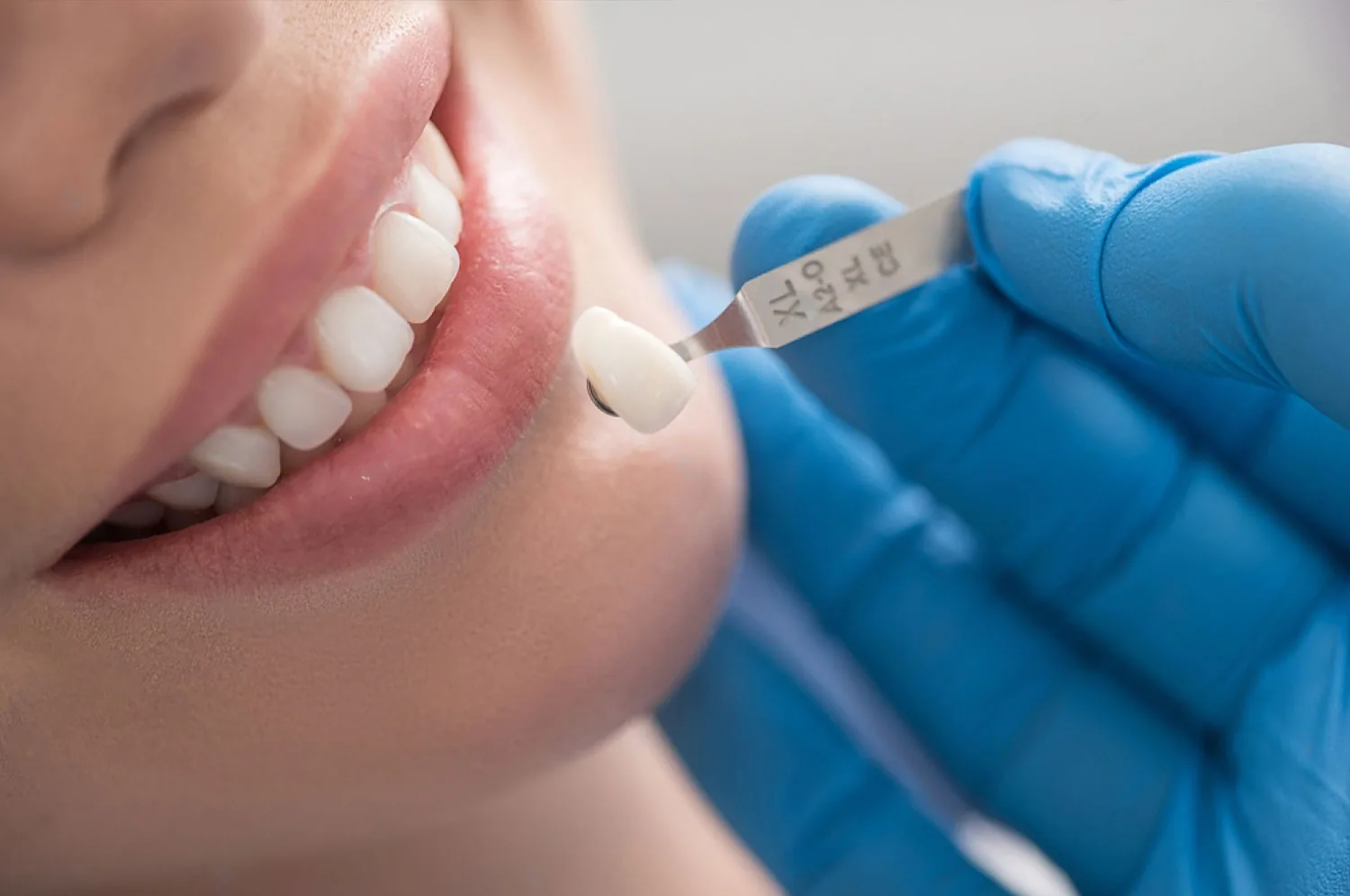
A veneer is an ultra-thin layer of porcelain that covers only the front of a tooth. Veneers are made of thin layers of strong ceramic. They are bonded to the front surface, much like a false fingernail sits on a nail. The ADA also covers what veneers can and cannot do.
Porcelain veneers are mainly cosmetic. They can:
- Change the shape or length of a tooth
- Repair a small chip or minor crack
- Cover stains that whitening cannot remove
- Close small gaps between teeth
- Make teeth that are slightly crooked look straight
Traditional veneers need a thin layer of enamel removed from the front of the tooth. Prepless veneers need little or no drilling, so even more of your natural tooth is kept. Dr. Haywood uses no-prep and minimal-prep veneers whenever they are a good fit.
Crown or veneer: which one do you need?
Both crowns and veneers improve how a tooth looks. The deciding question is usually how healthy and strong the tooth is underneath.
A crown is often better when
- The tooth has a large cavity or a big, old filling
- The tooth is cracked or has broken off
- The tooth has had a root canal, which can leave it more brittle
- The tooth is badly worn from grinding
- The tooth is a back tooth that takes heavy chewing forces
A veneer is often better when
- The tooth is healthy and strong, but you do not like how it looks
- The problem is color, shape, size or small gaps
- The tooth is a front tooth that shows when you smile
- You want to keep as much natural tooth as possible
Sometimes a smile uses both. For example, a front tooth with a root canal might get a crown, while the healthy teeth beside it get veneers. The two are made together so the color and shape match perfectly.
How long do they last?
Both crowns and veneers are durable and can last many years with good care. Still, they are not stronger than healthy natural enamel, and they can chip or wear if you bite hard objects or grind your teeth. Good home care and regular checkups help them last as long as possible.
Why the dentist and the lab both matter
The success of a crown or veneer depends on skilled people in two places: the dental office and the dental lab.
In the office, your dentist must shape the tooth with care, capture a precise impression and send the lab an accurate, detailed order. At Southern York Smile Care, the iTero Element 3D scanner takes a digital model of your teeth, with no messy putty. Dr. Haywood completed cosmetic training through the NYU Aesthetic Continuum and has more than 35 years in practice.
The dental lab technician's role is just as important. Highly skilled technicians build each crown or veneer by hand to the dentist's specifications. They must meet very precise standards for every detail:
- Shape, so the tooth looks natural and fits your smile
- Size, so it lines up with the teeth around it
- Color, including the subtle translucency of real enamel
- Fit, so it seals tightly at the gumline and feels right when you bite
This is a case of all or nothing. If any one detail is off, the restoration needs to be redone. The team at Southern York Smile Care works closely with a trusted dental lab to get each one right.
Caring for crowns and veneers
Treat your crowns and veneers like natural teeth, with a little extra attention:
- Brush twice a day with a soft brush and a non-abrasive toothpaste.
- Clean between your teeth daily, especially where the crown or veneer meets the gum.
- Avoid biting ice, pens, fingernails or hard candy.
- Wear a night guard if you grind or clench your teeth.
- Keep your 60-minute dental cleanings, so the edges can be checked and polished.
Porcelain does not stain like natural teeth, but the teeth around it can. If you plan to whiten, do it before your crowns or veneers are made, so they can be matched to your brighter shade.
Paying for your treatment
A crown that protects a damaged tooth is often partly covered by dental insurance, while cosmetic veneers usually are not. The office is out of network with every insurer: you pay at the visit, and the office files the claim so your insurance company can reimburse you. CareCredit and Cherry payment plans are available. Kelley Fisher, the Patient Care and Treatment Coordinator, can answer insurance and financing questions. See the financing page.
Ask which one is right for you
The best way to know whether you need a crown or a veneer is a consultation. Dr. Haywood will look at each tooth, explain your choices and help you plan a smile that is both healthy and beautiful. You can also explore cosmetic dentistry and restorative dentistry to see the full range of care.
Call (717) 235-3871 or request an appointment at Southern York Smile Care, 4 S. Main St in Shrewsbury, PA. Patients come from Shrewsbury, York, southern York County and northern Baltimore County.

DDS cum laude 1987, US Air Force residency, NYU cosmetic training and Fellow of the International Congress of Oral Implantologists, with 35+ years in practice.
Meet Dr. Haywood →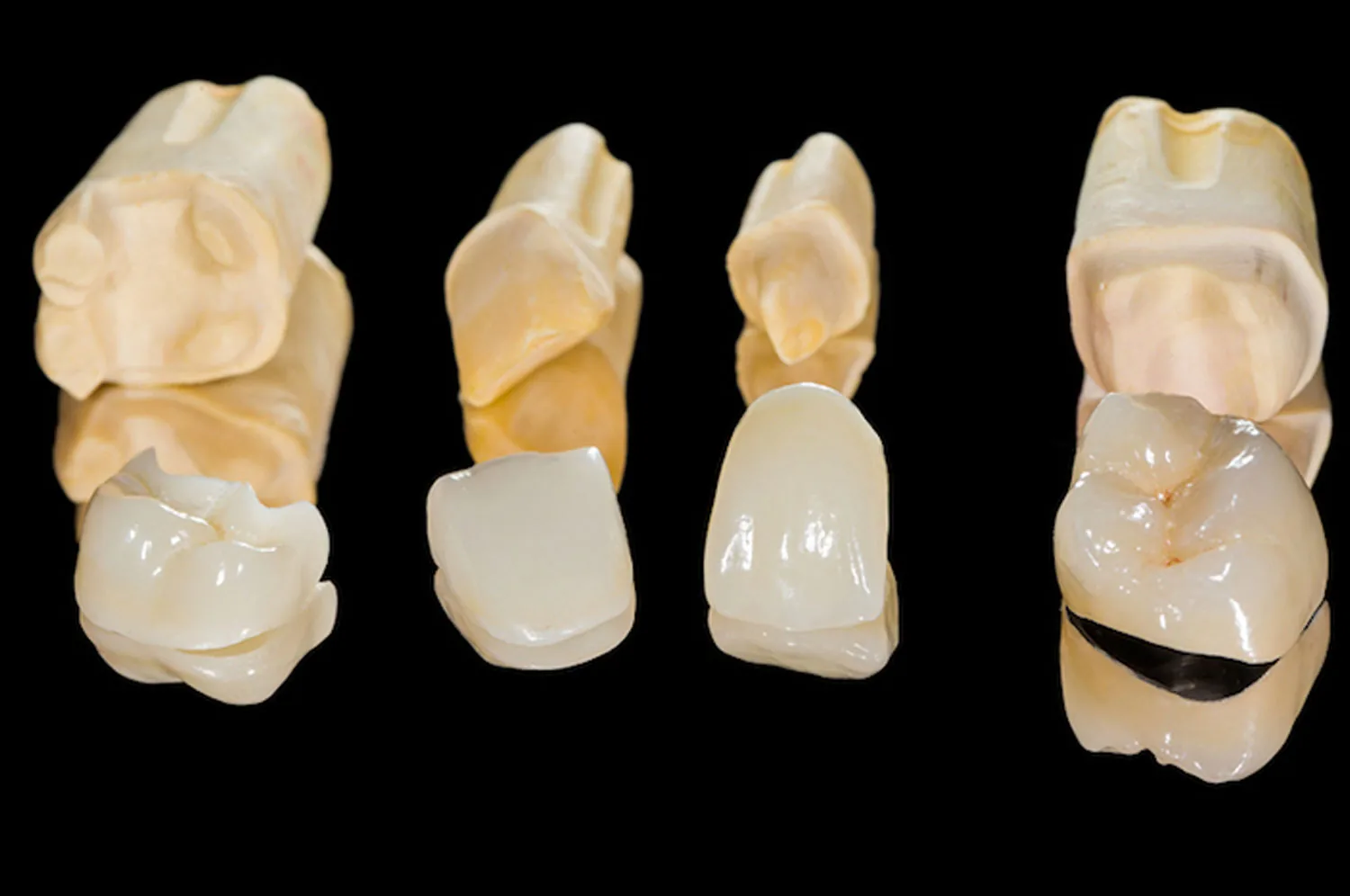 Crowning Achievements in Dentistry
 Coronation: Dental Crowns in Shrewsbury PA
 Spotlight-ready Smiles From Southern York Smile Care