
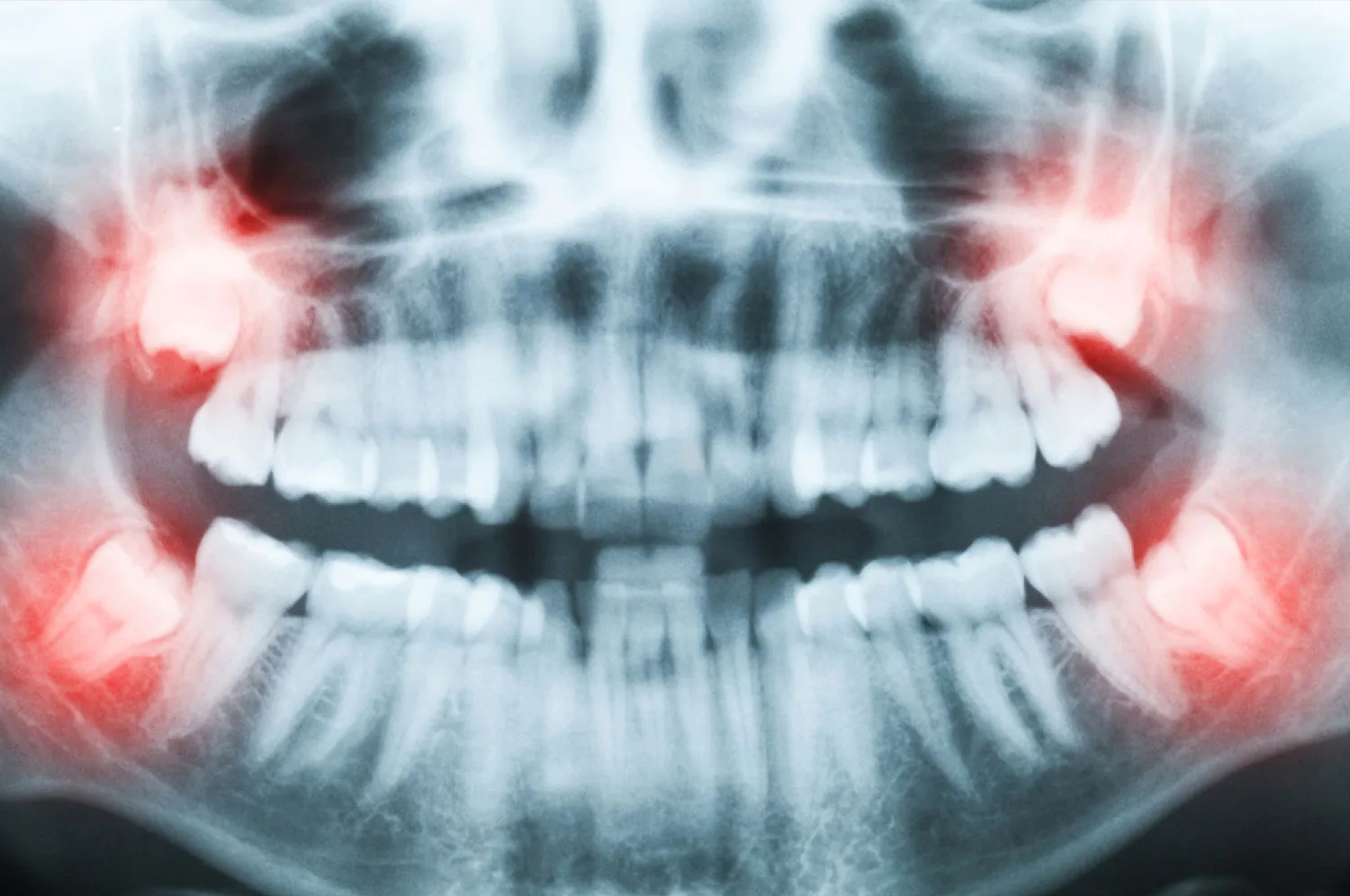
The Southern York Smile Care guide to wisdom teeth covers when they arrive, when they cause trouble and whether to remove them. Wisdom teeth usually appear between the late teens and mid-twenties. They are not always a problem, but it is important to learn early whether yours are coming in sideways or crowding your other teeth.
Checking your wisdom teeth at our Shrewsbury, PA office is simple and painless, and it can save you trouble down the road. Here is what every patient, and every parent of a teen, should know.
What are wisdom teeth?
Wisdom teeth are the third and last set of molars, at the very back of the mouth. Most people have four, one in each corner, though some have fewer or none at all. They earned their nickname because they arrive later than other teeth, usually somewhere between about 16 and 24.
Many modern jaws do not have quite enough room for these extra molars. When there is space and they grow in straight, wisdom teeth can be healthy, useful teeth. When there is not, problems can follow.
When wisdom teeth cause problems
A wisdom tooth that cannot fully come in is called impacted. It may be stuck under the gum, trapped in bone, or growing at an angle toward the tooth in front of it. Impacted or partly erupted wisdom teeth can lead to:
- Infection: A flap of gum over a partly erupted tooth traps food and bacteria, causing painful swelling called pericoronitis.
- Decay: Wisdom teeth are hard to reach with a toothbrush, so they and the molars beside them are prone to cavities.
- Gum disease and bone loss: Pockets around wisdom teeth can harm the gum and bone supporting nearby teeth.
- Damage to neighbors: A tilted wisdom tooth can push against the next molar and damage its root.
- Crowding: Some people notice front teeth shifting as wisdom teeth come in, though there are other causes too.
- Cysts: Rarely, a fluid-filled sac forms around an impacted tooth and can damage the jaw.
Signs to watch for
- Pain or tenderness at the back of the mouth
- Red, swollen or bleeding gums behind the last molars
- A bad taste or bad breath that will not go away
- Jaw stiffness or trouble opening your mouth fully
- Swelling along the jaw
If swelling spreads, or you have a fever or trouble swallowing or breathing, seek care right away. See our emergency dental care guide.
How we check your wisdom teeth
Southern York Smile Care cares for patients of all ages, and our team can help you decide whether your wisdom teeth need to come out. The check is quick and comfortable.
- A visual exam of the back of your mouth and the gums around any teeth that have come through
- Digital X-rays, with up to 90% less radiation than film, showing the position and angle of each wisdom tooth
- Green CT 3D imaging when more detail is needed, such as how close a lower wisdom tooth sits to the nerve in the jaw
The teen years are a good time for a first look. The roots are not yet fully formed, and if removal is advised, younger patients often heal more quickly. Our children's dentistry page covers care for younger patients. Learn about our imaging on the dental technology page.
Do my wisdom teeth need to come out?
Not always. Healthy wisdom teeth that are fully erupted, upright, free of decay and easy to clean can often stay, with regular monitoring at your checkups. Removal is usually recommended when wisdom teeth are causing problems, or are likely to, based on their position.
Dr. Steven Haywood will explain what your X-rays show and help you weigh the pros and cons. We can tell you whether a straightforward procedure will solve the problem or whether your case calls for more advanced care. When a tooth is deeply impacted or sits very close to a nerve, a referral to an oral surgeon may be the safest choice, and we will explain why.
What if my wisdom teeth don't hurt?
Lack of pain does not always mean all is well. Wisdom teeth can cause decay, gum pockets or damage to the next molar without any discomfort at first. That is why X-rays matter. If your wisdom teeth are staying, keep cleaning carefully around them with a small-headed brush and floss, and have them checked at each visit so any change is caught early.
Is it better to wait?
Sometimes watching is the right call. But if removal is likely, it is usually easier earlier in adulthood than later, when roots are longer and bone is denser. Dr. Haywood will help you weigh the timing against your schedule, health and comfort.
What to expect if you need an extraction
Wisdom teeth can be painful, and we do not like pain at Southern York Smile Care. Our goal is to give you the best care and attention, and to keep you relaxed and comfortable.
On the day
The area is thoroughly numbed before treatment. If you feel anxious, oral sedation is available; see sedation dentistry. Read more about the procedure on our oral surgery and extractions page.
Healing at home
- Bite gently on gauze to control bleeding for the first hour or so.
- Use cold packs on your cheek for the first day to limit swelling.
- Eat soft, cool foods and drink plenty of water.
- Don't use a straw, spit forcefully or smoke for several days. These can dislodge the blood clot and cause a painful dry socket.
- After the first day, rinse gently with warm salt water after meals.
- Take pain relievers as directed.
Most people feel much better within a few days. Call us if pain gets worse after the third day, or if you have a fever or swelling that keeps increasing.
Wisdom teeth care in Shrewsbury
Dr. Haywood brings more than 35 years in practice and a US Air Force advanced residency to every exam. Learn more on our meet the doctor page. Our office is at 4 S. Main St in Shrewsbury and welcomes patients from York, New Freedom, Stewartstown, southern York County and northern Baltimore County. We offer a full range of general and cosmetic dentistry, including dental implants.
The office is out of network with every insurer: you pay at your visit and the team files your claim for reimbursement. CareCredit and Cherry payment plans are available; see financing.
To have your wisdom teeth examined, call (717) 235-3871 or request an appointment. Let Dr. Haywood check your wisdom teeth and help you make a healthy decision for your future.

DDS cum laude 1987, US Air Force residency, NYU cosmetic training and Fellow of the International Congress of Oral Implantologists, with 35+ years in practice.
Meet Dr. Haywood → Dr. Steven W. Haywood: Calming Root Canal Fears
 Less Is More in Dentistry
 Been a While Since You’ve Visited a Dentist?