
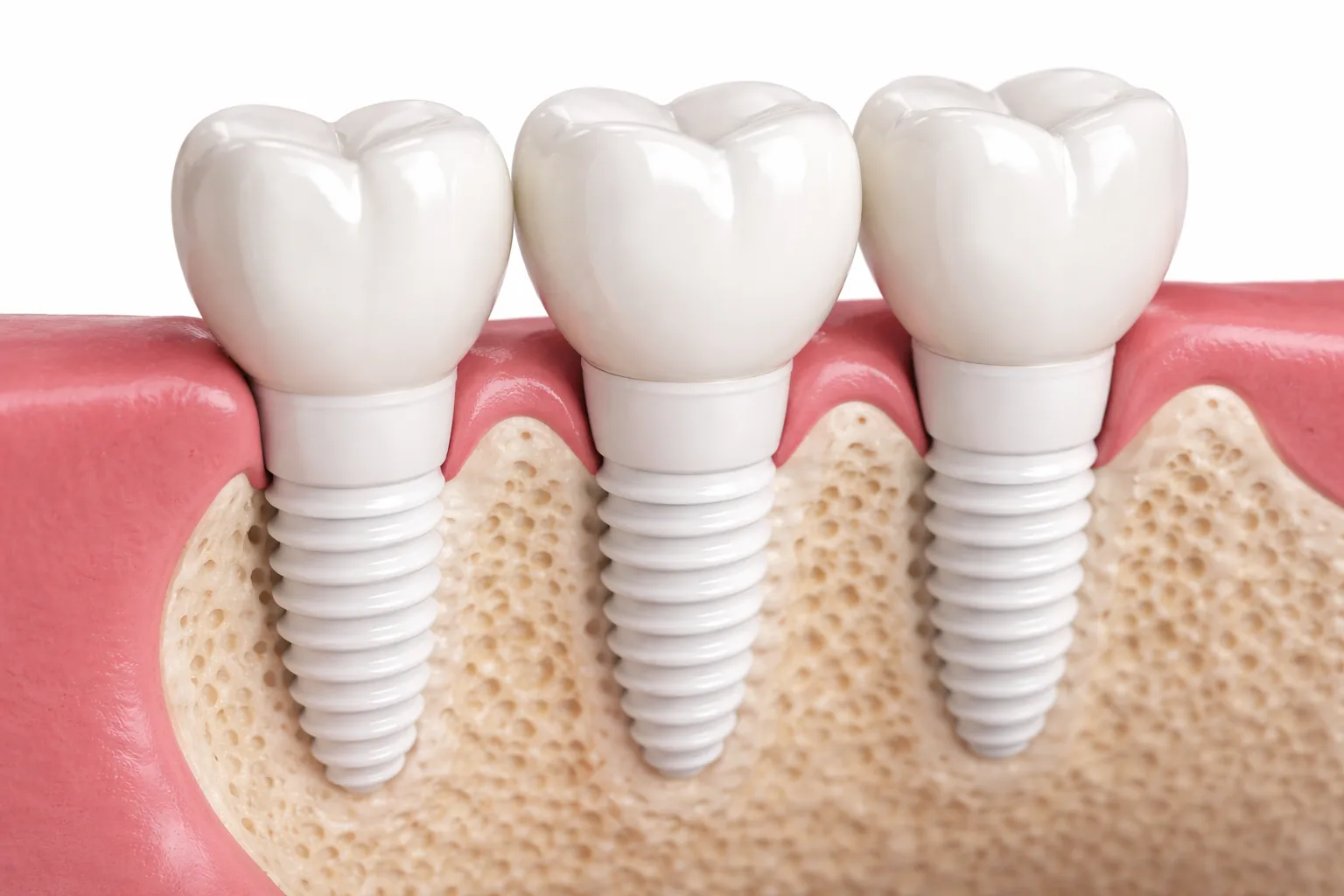
Ceramic dental implants vs titanium implants: which is better depends on your bone, the tooth being replaced and how you feel about metal. Dental implants have changed tooth replacement by giving people a permanent, natural-looking answer to missing teeth. Most implants are made of titanium, but many patients now ask about ceramic implants, also called zirconia implants.
Both can work very well. This guide from Southern York Smile Care in Shrewsbury, PA explains how they differ, the strengths and limits of each, and the questions to ask so you can make an informed choice with your dentist.
How a dental implant works
An implant replaces the root of a missing tooth. A small post is placed in the jawbone, where it bonds with the bone over a few months in a process called osseointegration. Once healed, the implant supports a crown, a bridge or a full arch of teeth. Because the implant stimulates the jaw the way a natural root does, it helps prevent the bone loss that follows tooth loss.
According to the American Academy of Implant Dentistry, dental implants are one of the most reliable and predictable tooth replacement treatments available today. Ceramic and titanium implants do the same basic job. What differs is the material, the design and how much long-term research stands behind each. Learn about the treatment itself on our single tooth implant page.
What are ceramic dental implants?
Ceramic implants are made from zirconium dioxide, usually called zirconia. It is a strong, white ceramic also used for crowns and bridges. Unlike titanium implants, ceramic implants are completely metal-free, which appeals to many patients who prefer holistic or biological dentistry.
Most ceramic implants are made as one piece, with the root and the post for the crown joined together. Some newer designs are two-piece, more like titanium systems.
Advantages of zirconia implants
- Metal-free: A good fit for patients who want to avoid metal in the body, or who have concerns about metal sensitivity.
- Natural color: Zirconia is white, so there is no chance of a gray shadow showing through thin gum tissue. That matters most in the front of the mouth.
- Gum friendly: Zirconia resists corrosion and is well tolerated by gum tissue. Research published through the National Institutes of Health has found that zirconia tends to attract little plaque.
Limits to understand
- Shorter track record: Zirconia implants have good early and mid-term results, but titanium has decades more research behind it.
- Less flexibility: One-piece designs leave less room to adjust angles after placement, and zirconia handles bending forces less well than titanium.
- Fewer full-arch uses: Ceramic implants are mostly used for single teeth or small bridges, not full-arch treatments such as All-on-4.
What about titanium implants?
Titanium has been used in implant dentistry for decades and is among the most studied materials in medicine. It bonds reliably with bone and is very strong and slightly flexible, which helps it handle chewing forces.
Advantages of titanium implants
- Long-term evidence: Decades of research and very high long-term success rates.
- Versatility: Two-piece designs allow fine adjustments, angled placement and many types of restorations, from a single crown to a full arch.
- Strength: Titanium resists fracture under heavy biting forces, which is helpful for back teeth and people who clench.
Limits to understand
- A gray tint can sometimes show through very thin gums, though careful planning and a tooth-colored abutment can help.
- A small number of people prefer to avoid metal entirely. True titanium allergy appears to be rare.
When each type may be recommended
There is no single best implant for everyone. During a consultation, your dentist weighs your bone density and volume, the position of the missing tooth, your gum thickness, your bite, your health history and your cosmetic goals.
In general:
- Zirconia is often considered for a single front tooth, for patients with thin gum tissue, and for patients who strongly prefer a metal-free mouth.
- Titanium is often recommended for back teeth under heavy bite force, cases needing angled placement, multiple implants, and full-arch treatment such as All-on-4.
Some patients with limited bone may need bone grafting first, whichever material is chosen. Our article Can you get dental implants if you have bone loss? explains more.
Caring for your implant, whatever the material
An implant cannot get a cavity, but the gum and bone around it can still become inflamed. This condition, called peri-implantitis, is similar to gum disease around natural teeth and is one of the main reasons implants fail over time. The material matters less than how well the area is kept clean.
- Brush twice a day with a soft brush, angling the bristles toward the gumline around the implant.
- Clean between teeth daily with floss, an interdental brush or a water flosser.
- Keep up with regular professional cleanings and checkups so early inflammation is caught quickly. At Southern York Smile Care, every cleaning is a full 60 minutes.
- If you smoke, quitting improves healing and long-term implant health.
- If you clench or grind, ask about a night guard to protect the implant crown and your natural teeth.
With good daily care and regular visits, both ceramic and titanium implants can serve you well for many years.
Ceramic dental implants in York, PA
Patients from York, Shrewsbury and northern Baltimore County who ask about ceramic implants usually want a long-lasting, natural-looking result that fits a whole-body approach to health. Southern York Smile Care's implant options include zirconia implants as well as titanium, along with full smile restoration.
Dr. Steven Haywood is a Fellow of the International Congress of Oral Implantologists with more than 35 years in practice. Implant planning starts with Green CT, a 3D cone beam scan that shows bone volume, nerve positions and the sinuses before treatment, and the office offers guided implant surgery. The practice is mercury-free and takes a holistic view of your care; read about our holistic dentistry and biological dentistry approach.
Questions to ask at your consultation
- Is my bone strong and wide enough for either material?
- Which option do you recommend for this tooth, and why?
- Is the implant one-piece or two-piece, and how does that affect my crown?
- How long will healing take before my final tooth is placed?
- How should I care for the implant long term?
The office is out of network with every insurer: you pay at your visit and the team files the claim for reimbursement. CareCredit and Cherry payment plans are available; see financing.
Schedule an implant consultation
If you are considering metal-free dental implants, or simply want to know which implant is right for you, Dr. Haywood will review your scans and talk through both options honestly. Call (717) 235-3871 or request an appointment at our Shrewsbury office. You can also explore our dental implant services.

DDS cum laude 1987, US Air Force residency, NYU cosmetic training and Fellow of the International Congress of Oral Implantologists, with 35+ years in practice.
Meet Dr. Haywood → Porcelain Veneers and Instant Orthodontics for Shrewsbury
 4 Reasons to Look for the ADA Seal
 Don’t Use your Teeth as Tools!